ACT Writing Rubric Overview
The ACT writing rubric evaluates argumentative essays using four domains scored on a 1-6 scale by trained graders. Each domain score (2-12) is the sum of two independent 1-6 ratings. The overall writing score is the rounded average of the four domain scores.
- Test Format: 40-minute argumentative essay
- Scoring Domains: Ideas and Analysis, Development and Support, Organization, Language Use
- Score Range: 1-6 per domain (from each grader), combined to 2-12
- Grading Method: Two trained readers score independently
- Task: Analyze multiple perspectives and develop your own position






Free ACT Writing Rubric Grading Tool
We've developed an AI grading platform that allows you to grade ACT Writing essays in 2 minutes or less using the official ACT writing test rubric domains. Try it out for free below.


%201.svg)
Official ACT Writing Test Rubric (PDF)
ACT Writing Test Scoring Rubric (PDF)
This official rubric from ACT, Inc. provides detailed scoring criteria for each domain and scorepoint level (1-6). Teachers can download this PDF for classroom use and reference when evaluating student argumentative essays.
What the ACT Writing Rubric Domains Measure
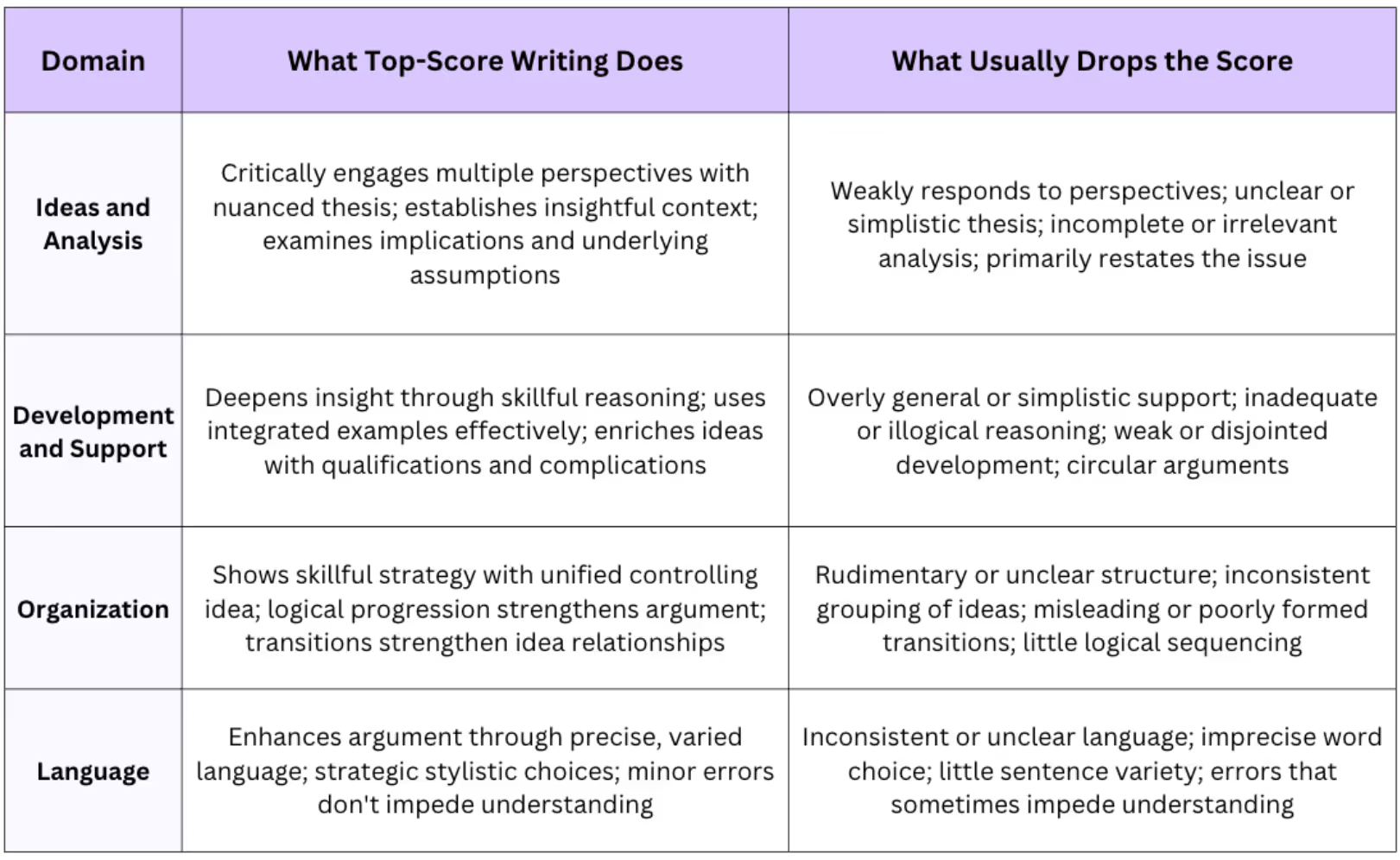
The ACT writing score rubric evaluates four key domains that work together to assess argumentative writing quality. Each domain focuses on a distinct aspect of effective argumentation.
- Ideas and Analysis measures how well students generate arguments and engage critically with multiple perspectives. Strong essays establish a clear thesis, create meaningful context for analysis, and examine implications or underlying assumptions.
- Development and Support evaluates the depth of reasoning and use of examples to strengthen arguments. High-scoring essays use integrated reasoning, provide relevant illustrations, and address qualifications or complications that enrich the analysis.
- Organization assesses how clearly and purposefully ideas are arranged throughout the essay. Effective essays show a controlling idea, logical progression of points, and strong transitions that clarify relationships between ideas.
- Language Use reflects the ability to communicate arguments with clarity and precision. This includes varied sentence structures, precise word choice, appropriate tone, and control of grammar and mechanics that doesn't impede understanding.
ACT Writing Rubric Domain Quick-Reference
How the ACT Writing Scoring Rubric Works
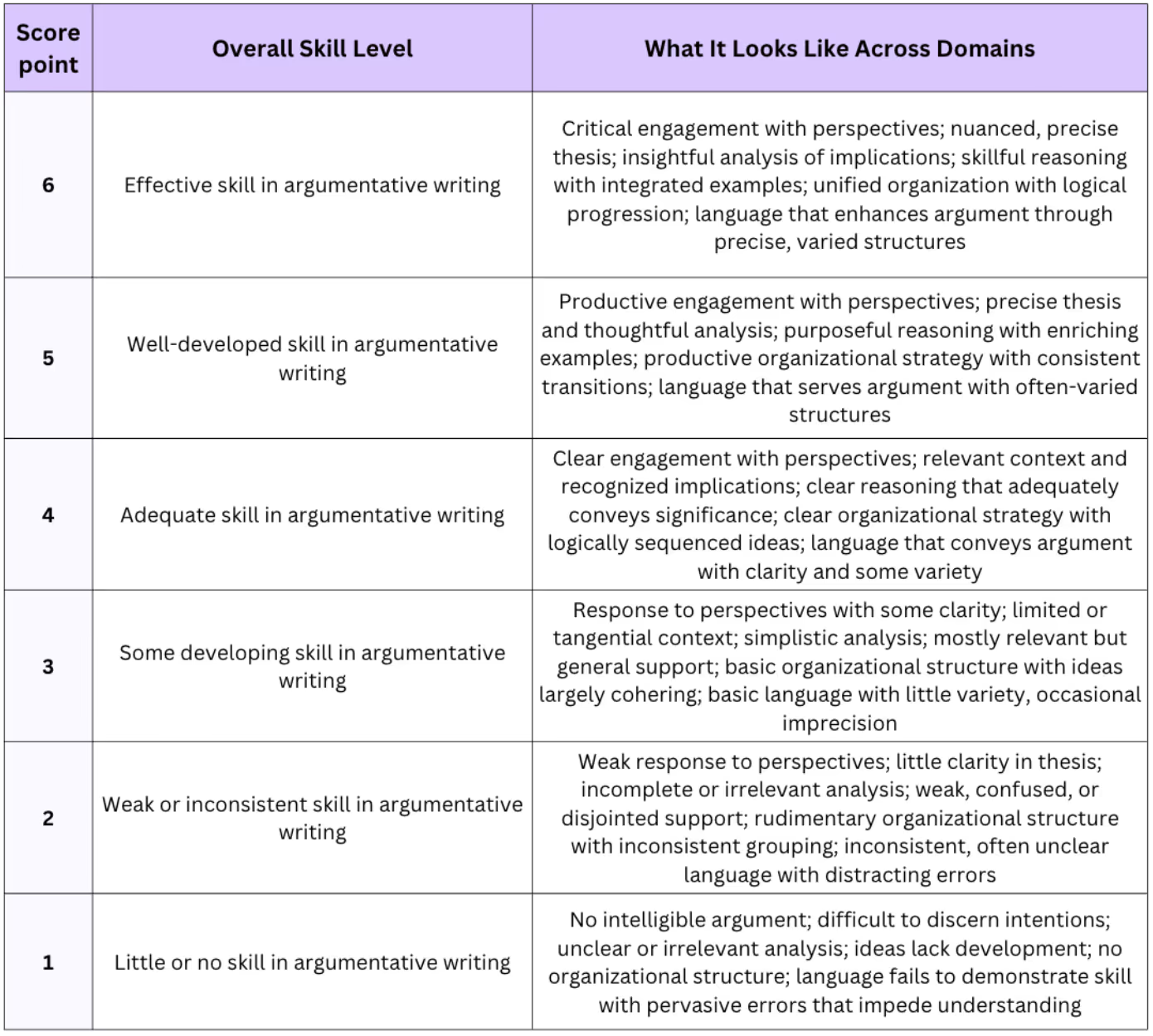
The ACT writing test rubric uses six scorepoint levels to describe writing quality across all four domains. Each scorepoint reflects increasingly sophisticated skill in constructing and communicating arguments. Use the descriptors to score each domain consistently across a class.
ACT Writing Scorepoint Summary
Benefits of EssayGrader

Time efficiency & streamlined grading
Simplify and speed up the grading process with intuitive features, allowing you to focus on impactful teaching.

Consistency
& fairness
Ensure fair and accurate grading by eliminating human bias, all while aligning with your curriculum standards.

Actionable insights
& feedback
Receive detailed feedback and growth insights on each essay and seamlessly share them with your students.
Less grading, more teaching
EssayGrader cuts down grading workload so teachers can focus on teaching the craft of writing instead of getting stuck in conventions and mechanics.
Better student outcomes
Students get consistent practice and instant feedback that helps them improve writing skills, build confidence, and prepare for timed assessments like AP exams.
Hours saved every week
Teachers save 5–6 hours a week on grading. That time can be redirected to lesson planning, one-on-one support, or simply reclaiming personal time.
What teachers say about EssayGrader
"EssayGrader is unparalleled in giving students the opportunity to practice their writing and receive the feedback they need to improve. The extensive practice my students get from EssayGrader reduces my grading workload and prepares them for the timed writes I read and score, as well as for the AP exam itself."
.avif)
"This is the first time that an innovation has directly impacted my ability to reach students at a higher level. EssayGrader helps me not to be bogged down by the tedious, albeit necessary, minutia of things like conventions and grammar which frees up my grading time for me to teach and evaluate the “art” of writing."

"EssayGrader has been phenomenal to use for my ELA classes.I grade all of my ELA essays with Common Core State Standards, and it probably saves me 5-6 hours of time per week. I loved it so much that I recommended it to our principal, and we are looking to roll this out with other teachers at our school."
.avif)
Frequently Asked Questions About the ACT Writing Rubric
Common questions teachers ask about the NJSLA rubric. Contact us if you don't see your question answered below.
How is the ACT writing test scored using the rubric?
Two trained graders independently score each essay using the ACT writing test rubric. Each grader assigns scores of 1-6 across four domains: Ideas and Analysis, Development and Support, Organization, and Language Use. The two scores are added together to create domain scores of 2-12, and these four domain scores are averaged (and rounded) to produce the final Writing score. This ACT writing score rubric system ensures consistent evaluation across all essays.
What's the difference between domain scores and the overall ACT writing score?
Domain scores show performance in specific areas of argumentative writing (Ideas and Analysis, Development and Support, Organization, Language Use), each scored 2-12. The overall ACT writing score is the rounded average of these four domain scores, also on a 2-12 scale. Teachers can use domain scores to identify specific strengths and areas for improvement in student writing.
Can teachers use the ACT writing rubric for classroom essays?
Yes, teachers can apply the ACT writing scoring rubric to any argumentative essay in the classroom. The four domains—Ideas and Analysis, Development and Support, Organization, and Language Use—reflect fundamental argumentative writing skills that extend beyond test preparation. Many teachers use the rubric's 1-6 scorepoint descriptors to evaluate essays consistently and provide targeted feedback to students.
What is a good ACT writing score?
A "good" score depends on student goals and the colleges they're targeting. Teachers can use the US and State Rank percentiles shown on ACT score reports to interpret how a student's score compares to other test-takers nationally and within their state. Competitive colleges typically look for scores that demonstrate strong argumentative writing skills across all four domains.
How long does it take to grade essays with the ACT writing rubric?
Many teachers spend 10+ minutes per essay when evaluating all four domains thoroughly using the ACT writing test rubric. For a class of 30 students, this can require several hours of focused grading time. EssayGrader's AI can apply the rubric domains to an entire class in under 2 minutes while maintaining consistent scoring standards.
Do I need to score all four domains separately?
Yes, the ACT writing scoring rubric requires separate evaluation of each domain (Ideas and Analysis, Development and Support, Organization, Language Use). Scoring domains separately provides more detailed feedback and helps identify specific areas where students excel or need improvement, rather than assigning a single holistic score.