AP English Language & Composition Rubric Overview
The AP English Language & Composition writing rubric evaluates student performance on three free-response questions (FRQs): Synthesis Essay, Rhetorical Analysis, and Argument Essay. Each essay is scored using the same three-row rubric structure with a total of 6 possible points per essay.
- Exam Component Covered: Free-Response Questions (FRQs)
- Essay Types: Synthesis (FRQ 1), Rhetorical Analysis (FRQ 2), Argument (FRQ 3)
- Scoring Structure: Three analytic rows (Thesis, Evidence & Commentary, Sophistication)
- Points Per Essay: 0–6 points per FRQ
- Total FRQ Points: 18 points across all three essays (FRQs make up ~55% of the total AP Lang exam score)
- Scoring Breakdown: Thesis (0–1), Evidence & Commentary (0–4), Sophistication (0–1)
Note: The AP English Language multiple-choice section (45% of the exam) is scored separately and does not use a rubric; this page focuses exclusively on official FRQ scoring.




Free AP Lang Essay Grader
We've developed an AI grading platform that allows you to grade an entire class's AP Lang essays in 2 minutes or less using the official AP English Language & Composition rubric. Try it out for free below.


%201.svg)
Official AP English Language & Composition Rubrics PDF Download
AP Lang Free-Response Questions 1-3 Scoring Rubrics
- AP English Language & Composition FRQ 1-3 Scoring Rubrics (PDF) - Effective Fall 2019
These official rubrics from the College Board provide detailed scoring criteria for all three AP Lang free-response questions. Teachers can download this PDF for classroom use and reference during instruction.
How to Score Essays Using the AP Lang Rubric
The AP English Language & Composition rubric uses a consistent three-row scoring structure across all three FRQs. Each row evaluates a specific aspect of student writing, with essays earning a total of 0-6 points.
Scoring Rows:
- Row A - Thesis (0-1 point): Evaluates whether the response includes a defensible thesis that responds to the prompt. For Synthesis and Argument essays, the thesis must present a defensible position. For Rhetorical Analysis, the thesis must analyze the writer's rhetorical choices.
- Row B - Evidence and Commentary (0-4 points): Evaluates the quality and integration of evidence along with the commentary explaining how evidence supports the student's argument or analysis. Higher scores require specific evidence and consistent explanation of how evidence supports a line of reasoning.
- Row C - Sophistication (0-1 point): Evaluates whether the response demonstrates sophistication of thought and/or a complex understanding of the rhetorical situation through nuanced arguments, effective rhetorical choices, or consistently vivid and persuasive style.
AP Lang Rubric Scoring Breakdown
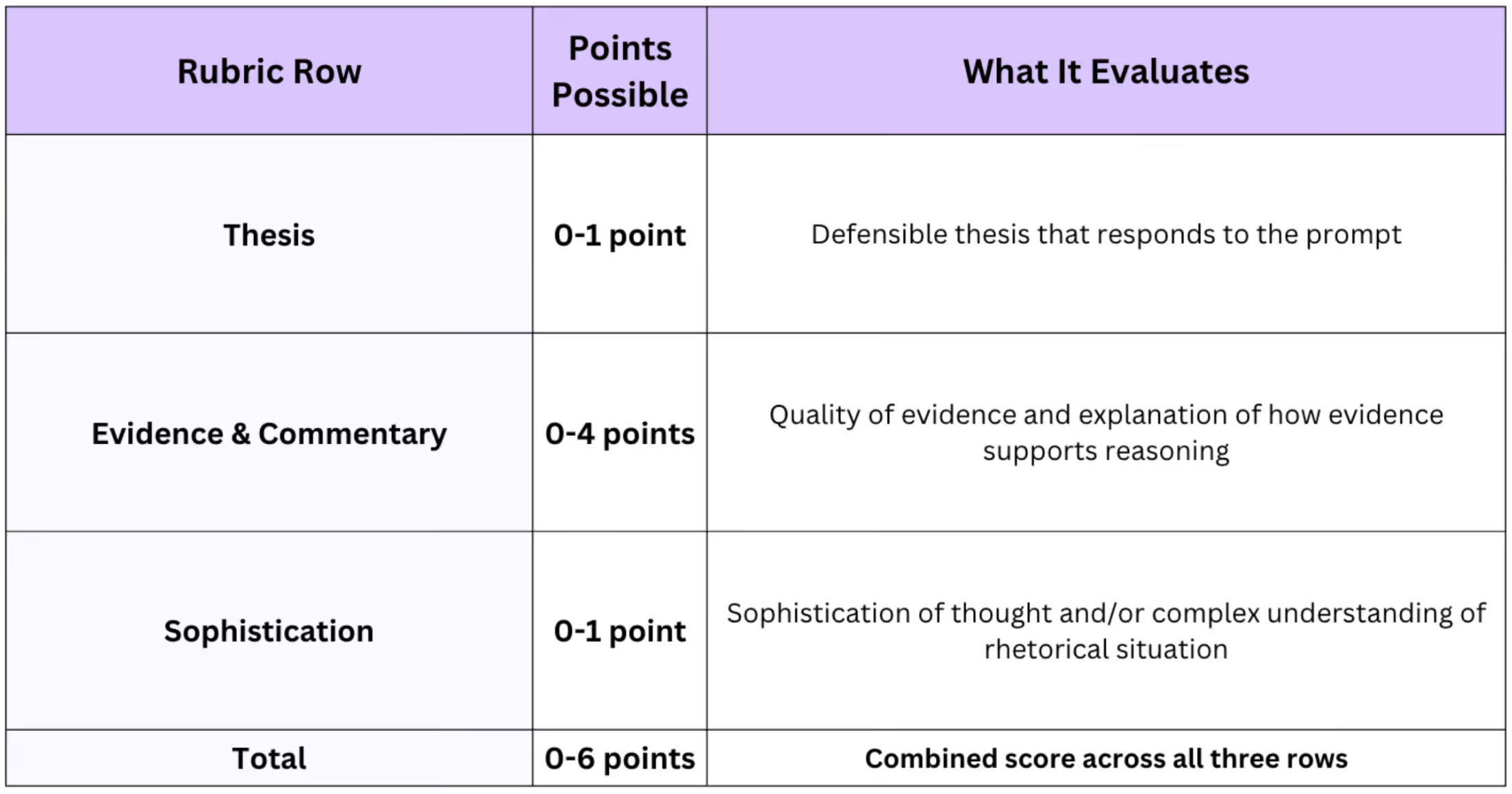
Important Note: Writing that suffers from grammatical and/or mechanical errors that interfere with communication cannot earn the fourth point in the Evidence & Commentary row.
AP Lang Rubric Differences by Essay Type
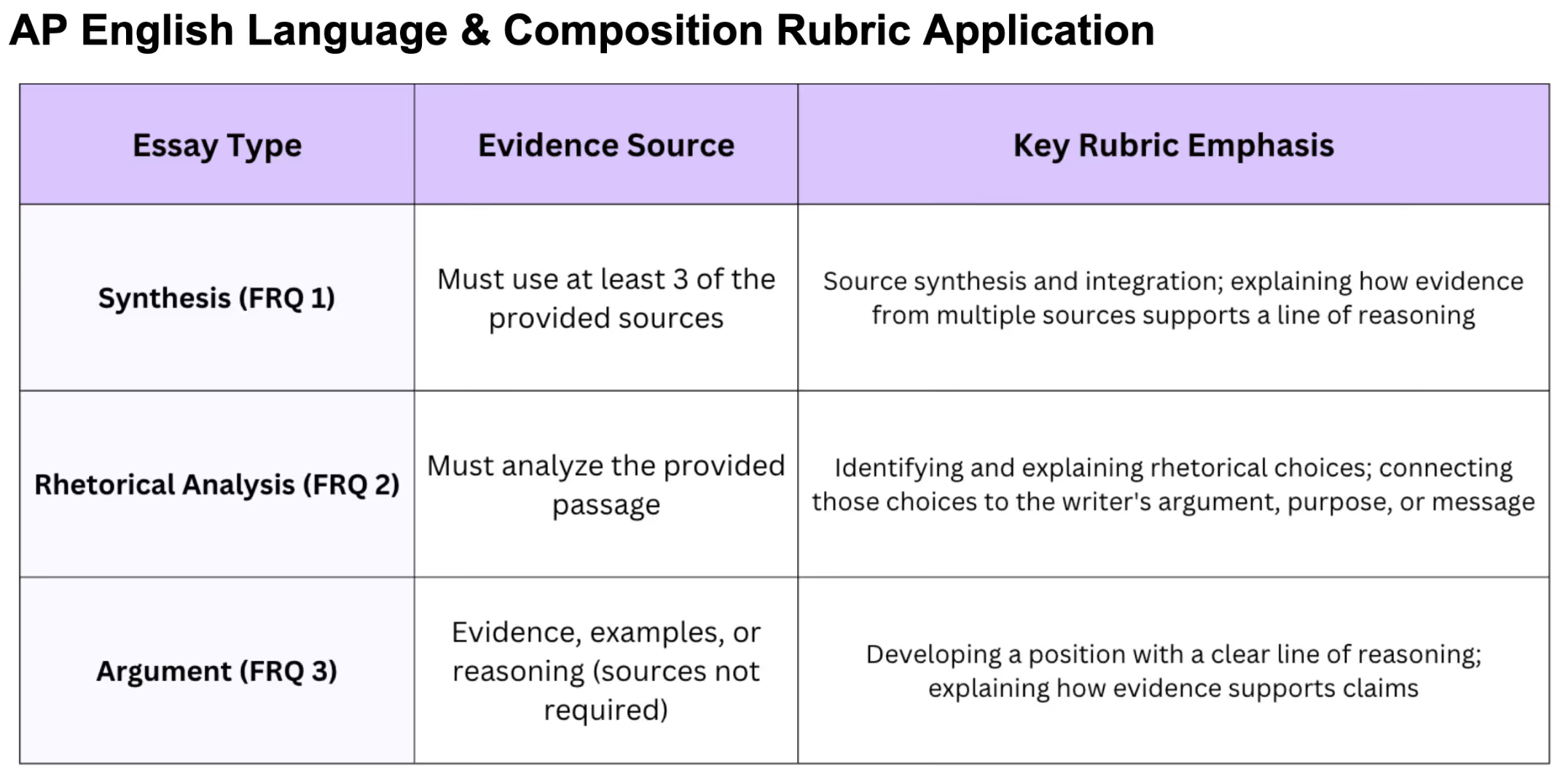
While all three AP English Language & Composition FRQs use the same three-row rubric structure, each essay type emphasizes different skills and sources of evidence.
AP Lang Synthesis Rubric (FRQ 1)
The AP Lang synthesis rubric requires students to develop a position by synthesizing information from at least three provided sources.
Thesis requirements: Presents a defensible position in response to the prompt.
Evidence & Commentary requirements: Must reference at least three provided sources. Score of 4 requires specific evidence from at least three sources to support all claims in a line of reasoning, with consistent explanation of how evidence supports that reasoning.
Sophistication opportunities: Crafting nuanced arguments by identifying and exploring complexities or tensions across sources; articulating implications or limitations by situating arguments within broader contexts.
AP Lang Rhetorical Analysis Rubric (FRQ 2)
The AP Lang rhetorical analysis rubric requires students to analyze how a writer's rhetorical choices contribute to their argument, purpose, or message.
Thesis requirements: Presents a defensible thesis that analyzes the writer's rhetorical choices.
Evidence & Commentary requirements: Must provide specific evidence from the passage. Score of 4 requires explaining how multiple rhetorical choices in the passage contribute to the writer's argument, purpose, or message, with consistent explanation of the line of reasoning.
Sophistication opportunities: Explaining the significance or relevance of the writer's rhetorical choices; explaining a purpose or function of the passage's complexities or tensions.
AP Lang Argument Rubric (FRQ 3)
The AP Lang argument rubric requires students to develop a position on an issue and support it with evidence and reasoning.
Thesis requirements: Presents a defensible position in response to the prompt.
Evidence & Commentary requirements: Can use evidence from provided sources, personal experience, or general knowledge. Score of 4 requires specific evidence to support all claims in a line of reasoning, with consistent explanation of how evidence supports that reasoning.
Sophistication opportunities: Crafting nuanced arguments by consistently identifying and exploring complexities or tensions; articulating implications or limitations by situating arguments within broader contexts.
How the AP Lang Rubric Is Applied by Essay Type
Official AP Lang Sample Essays and Resources
The College Board provides free-response questions and scoring guidelines from previous AP English Language & Composition exams to help teachers understand scoring expectations.
Recent AP Lang Free-Response Questions:
These resources include student samples at different score points with scoring commentary to help teachers calibrate their understanding of the AP English Language & Composition rubric.
Benefits of EssayGrader

Time efficiency & streamlined grading
Simplify and speed up the grading process with intuitive features, allowing you to focus on impactful teaching.

Consistency
& fairness
Ensure fair and accurate grading by eliminating human bias, all while aligning with your curriculum standards.

Actionable insights
& feedback
Receive detailed feedback and growth insights on each essay and seamlessly share them with your students.
Less grading, more teaching
EssayGrader cuts down grading workload so teachers can focus on teaching the craft of writing instead of getting stuck in conventions and mechanics.
Better student outcomes
Students get consistent practice and instant feedback that helps them improve writing skills, build confidence, and prepare for timed assessments like AP exams.
Hours saved every week
Teachers save 5–6 hours a week on grading. That time can be redirected to lesson planning, one-on-one support, or simply reclaiming personal time.
What teachers say about EssayGrader
"EssayGrader is unparalleled in giving students the opportunity to practice their writing and receive the feedback they need to improve. The extensive practice my students get from EssayGrader reduces my grading workload and prepares them for the timed writes I read and score, as well as for the AP exam itself."
.avif)
"This is the first time that an innovation has directly impacted my ability to reach students at a higher level. EssayGrader helps me not to be bogged down by the tedious, albeit necessary, minutia of things like conventions and grammar which frees up my grading time for me to teach and evaluate the “art” of writing."

"EssayGrader has been phenomenal to use for my ELA classes.I grade all of my ELA essays with Common Core State Standards, and it probably saves me 5-6 hours of time per week. I loved it so much that I recommended it to our principal, and we are looking to roll this out with other teachers at our school."
.avif)
Frequently Asked Questions About the AP Lang Rubric
Common questions teachers ask about the AP Lang Rubric. Contact us if you don't see your question answered below.
What is the Evidence & Commentary row in the AP Lang grading rubric?
The Evidence & Commentary row (Row B) evaluates two components: the quality of evidence provided and how well the commentary explains how that evidence supports the student's argument or line of reasoning. For the AP Lang synthesis rubric, students must reference at least three provided sources in a way that supports a clear line of reasoning.
For the AP Lang argument rubric, evidence can come from sources, personal experience, or general knowledge. The highest score (4 points) requires specific evidence supporting all claims in a line of reasoning, with consistent explanation of how the evidence supports that reasoning.
How do you earn the sophistication point in AP Lang?
The sophistication point in AP Lang is earned by demonstrating sophistication of thought and/or a complex understanding of the rhetorical situation. This can be achieved by crafting nuanced arguments that identify complexities or tensions, articulating implications or limitations within broader contexts, making effective rhetorical choices that strengthen the response, or employing consistently vivid and persuasive style.
The sophistication must be integrated into the student's argument, not just surface-level features like complex vocabulary or fancy wording. Using a title or complex sentences alone will not earn this point.
What doesn't earn the thesis point on the AP Lang essay rubric?
A thesis will not earn a point on the AP Lang essay rubric if it simply restates the prompt, provides only a summary without a clear position, is too vague or must be inferred, or does not respond to the prompt. For synthesis and argument essays, the thesis must present a defensible position. For rhetorical analysis, the thesis must analyze the writer's rhetorical choices rather than just describe or summarize the passage.
Do grammar and mechanics errors affect the AP Lang score?
Grammar and mechanics errors do not directly deduct points on the AP English Language & Composition rubric. However, if grammatical and/or mechanical errors interfere with communication, the response cannot earn the fourth point in the Evidence & Commentary row. Students are not penalized for what they do wrong—they are rewarded for what they do right according to the rubric criteria.
How does the AP Lang rhetorical analysis rubric differ from synthesis and argument?
The AP Lang rhetorical analysis rubric differs primarily in its evidence requirements and thesis focus. For rhetorical analysis, students must analyze how the writer's rhetorical choices contribute to their argument, purpose, or message, using specific evidence from the provided passage.
In contrast, synthesis requires synthesizing at least three provided sources to support a position, while argument allows students to use evidence from any source including personal experience or general knowledge. All three essays use the same three-row rubric structure but emphasize different analytical skills.
Where can I find official AP Lang scoring guidelines and sample essays?
Official AP Lang scoring guidelines and sample essays are available through the College Board's AP Central website. Each year's free-response questions include scoring guidelines with student samples at different score points and scoring commentary to help teachers understand how the rubric is applied.
These resources show actual student responses scored by AP readers, providing concrete examples of what earns different point values across the thesis, evidence & commentary, and sophistication rows.