AP Seminar IWA Rubric Overview
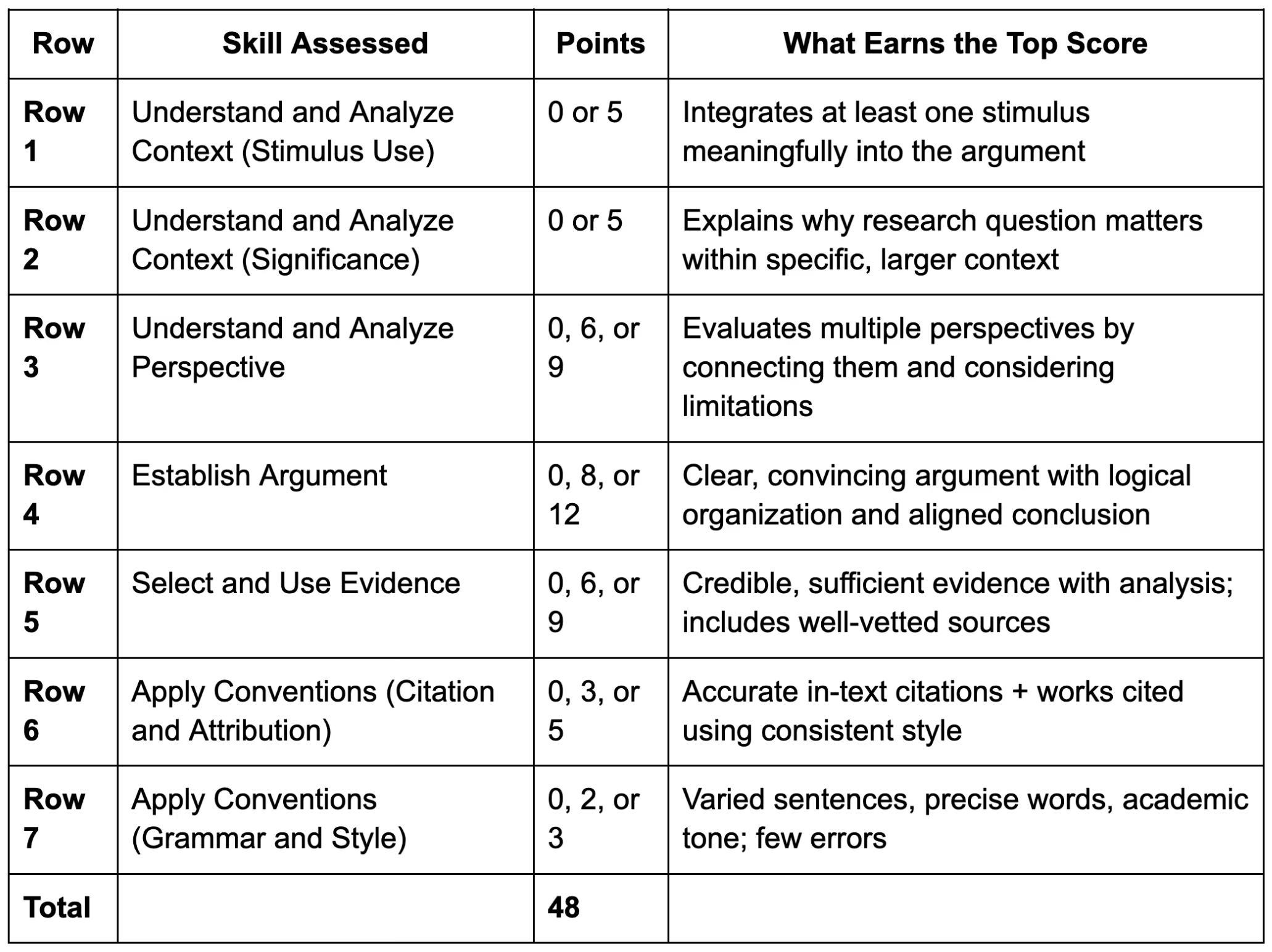
The Individual Written Argument (IWA) is a core component of College Board's AP Seminar. Students respond to a stimulus packet by developing an academically focused argument. The AP Seminar IWA rubric scores essays across 7 independent rows for a total of 48 points, evaluating context, perspective, argument construction, evidence selection, citation practices, and writing style.
- Total Points: 48 points (scored across 7 rubric rows)
- Assessment Type: Individual Written Argument responding to stimulus materials
- Word Count: No more than 2,000 words (10% cushion)
- Scoring Categories: Context (2 rows), Perspective (1 row), Argument (1 row), Evidence (1 row), Citations (1 row), Style (1 row)
- Updated: Current AP Seminar rubric framework






Free AP Seminar IWA AI Grader
We've developed an AI grading platform that allows you to grade AP Seminar IWA essays in 2 minutes or less using the official College Board rubric. Our tool evaluates all 7 rubric rows—from context and argument to evidence and citations. Try it out for free below.


%201.svg)
Official AP Seminar IWA Scoring Guidelines (PDF Download)
The College Board provides comprehensive IWA scoring guidelines that detail exactly how the 48-point rubric is applied. These documents include complete rubric criteria, decision rules, and scoring notes for each row.
AP Seminar IWA Resources
- 2025 AP Seminar IWA Scoring Guidelines (PDF) - Complete 7-row rubric with detailed criteria and examples
- 2025 AP Seminar Performance Task 2 Sample Responses (PDF) - Student samples with scoring commentary
These official materials provide the IWA rubric framework and scoring criteria. Teachers can download these PDFs for classroom use and reference during instruction.
How the AP Seminar IWA Rubric Scoring Works
The IWA is scored across 7 rubric rows for a total of 48 points. Each row is scored independently.
The 7 rubric rows:
- Rows 1-2: Context (10 points) - Uses stimulus meaningfully + explains why the issue matters in a larger, specific context
- Row 3: Perspective (9 points) - Analyzes multiple perspectives by connecting them, not just listing what sources say
- Row 4: Argument (12 points) - Clear line of reasoning with claims connected to evidence and an aligned conclusion
- Row 5: Evidence (9 points) - Credible sources used purposefully with analysis (not just quotes). Includes well-vetted sources beyond stimulus (e.g., scholarly/peer-reviewed, credentialed, reputable orgs)
- Row 6: Citations (5 points) - In-text citations + works cited, both accurate and consistent. Missing works cited or largely missing in-text citations = 0 points
- Row 7: Style (3 points) - Academic tone, clear prose, sentence variety
AP Seminar IWA Rubric Scoring Breakdown (All Rows)
Fast Grading Workflow Teachers Can Use
Grade in order of structural importance—foundation first, details last.
1. Row 4 first (Argument)
Check for clear line of reasoning. If there's no real argument (just summary), everything else collapses. Look for thesis with reasoning, claims that connect to evidence, and student voice driving the response.
2. Rows 1-2 (Context)
Verify stimulus is used meaningfully (not just mentioned). Check that context is specific—not vague statements like "things were changing."
3. Row 3 (Perspectives)
Look for real comparison and analysis. Strong essays place perspectives in dialogue—not just name-drop them. Attribution must be clear.
4. Row 5 (Evidence)
Check for at least one well-vetted source beyond stimulus (scholarly, peer-reviewed, credentialed, or reputable organization). Encyclopedias and dictionaries don't count. Evidence should be analyzed, not just quoted.
5. Rows 6-7 (Mechanics)
Row 6: Check for works cited AND in-text citations. Missing works cited or largely missing in-text citations = 0 points.
Row 7: Scan for academic tone and clarity. Multiple errors that confuse meaning = lower score.
Think of it like grading a house: Argument is the foundation. Citations are the locks on the doors.
Row-by-Row "Earns It" vs. "Doesn't Earn It" Checklist
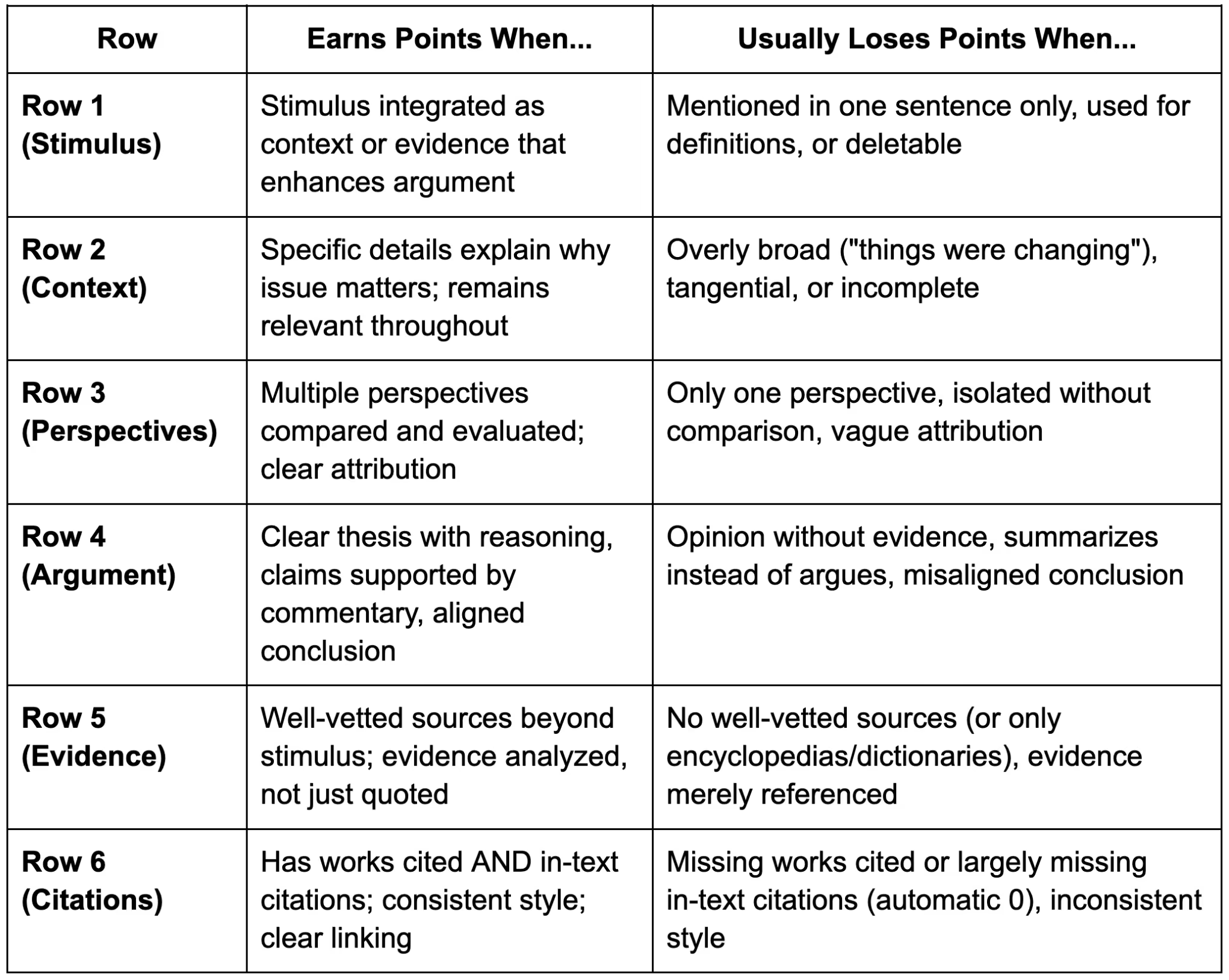
Critical: Missing works cited or largely missing in-text citations = 0 points for Row 6.
Grade AP Seminar IWA Essays in Minutes Instead of Hours
Use EssayGrader's AI to apply the AP Seminar IWA rubric automatically. Get detailed feedback across all 7 rows—context, perspective, argument, evidence, citations, and style—with hours of your time back for what matters most: teaching.

.avif)
.avif)
Benefits of EssayGrader

Time efficiency & streamlined grading
Simplify and speed up the grading process with intuitive features, allowing you to focus on impactful teaching.

Consistency
& fairness
Ensure fair and accurate grading by eliminating human bias, all while aligning with your curriculum standards.

Actionable insights
& feedback
Receive detailed feedback and growth insights on each essay and seamlessly share them with your students.
Less grading, more teaching
EssayGrader cuts down grading workload so teachers can focus on teaching the craft of writing instead of getting stuck in conventions and mechanics.
Better student outcomes
Students get consistent practice and instant feedback that helps them improve writing skills, build confidence, and prepare for timed assessments like AP exams.
Hours saved every week
Teachers save 5–6 hours a week on grading. That time can be redirected to lesson planning, one-on-one support, or simply reclaiming personal time.
What teachers say about EssayGrader
"EssayGrader is unparalleled in giving students the opportunity to practice their writing and receive the feedback they need to improve. The extensive practice my students get from EssayGrader reduces my grading workload and prepares them for the timed writes I read and score, as well as for the AP exam itself."
"This is the first time that an innovation has directly impacted my ability to reach students at a higher level. EssayGrader helps me not to be bogged down by the tedious, albeit necessary, minutia of things like conventions and grammar which frees up my grading time for me to teach and evaluate the “art” of writing."
"EssayGrader has been phenomenal to use for my ELA classes.I grade all of my ELA essays with Common Core State Standards, and it probably saves me 5-6 hours of time per week. I loved it so much that I recommended it to our principal, and we are looking to roll this out with other teachers at our school."