Narrative Writing Rubric Overview
Narrative writing rubrics evaluate students' ability to tell a real or imagined story or recount an experience through clear focus, developed elaboration, logical organization, effective word choice, and proper conventions. Most narrative rubrics score the same core traits, but scoring scales vary—often 4- or 6-level, sometimes mixed scales or with 'NS/0' categories depending on the assessment.
- Grade Levels: Elementary (Grades 2-5), Middle School (Grades 6-8), High School (Grades 9-12)
- Common Writing Types: Personal narrative, narrative essay, text-based narrative
- Core Scoring Traits: Focus/Ideas, Elaboration/Development, Organization, Word Choice/Language, Conventions
- Often Included Traits: Voice/Style, Sentence Fluency/Structure, Integration (holistic judgment)
- Scoring Scales: Varies by rubric (4-level, 6-level, or mixed scales)





Free Narrative Writing AI Grader
We've developed an AI grading platform that allows you to grade an entire class's narrative essays in 2 minutes or less using comprehensive narrative writing rubrics. Our tool evaluates focus, development, organization, language, and conventions. Try it out for free below.


%201.svg)
Downloadable Narrative Writing Rubric PDFs (Commonly Used)
These narrative writing rubric PDFs cover common grade bands and narrative formats. Teachers can download them for classroom use and scoring reference.
Elementary Narrative Writing Rubrics
- Grade 5 Narrative Writing Rubric (Six Traits) - Ideas, elaboration, organization, word choice, voice, sentence fluency, conventions
Upper Elementary & Middle School Narrative Writing Rubrics (Grades 3–8)
- Grades 3-8 Narrative Performance Task Rubric - Organization/purpose, development/elaboration, conventions (Covers Grades 3–4 as part of the 3–8 band.)
Middle & High School Narrative Rubrics
- Grades 6-12 Narrative Writing Rubric (Teaching Tolerance) - Focus, controlling idea, textual evidence, development, organization, word choice, conventions
High School Narrative Writing Rubrics
- Grade 10 Narrative Rubric - Prompt task, development of narrative, organization, language use
- Personal Narrative Marking Rubric - Content, organization, sentence structure, vocabulary, conventions
General Narrative Essay Rubrics
- Rubric for Narrative Writing Piece (6-point scale) - Focus, elaboration, organization, conventions, integration
These narrative writing rubric PDFs cover common grade bands and narrative formats. Teachers can download them for classroom use and scoring reference.
How Narrative Writing Rubrics Work
Narrative writing rubrics assess student writing across 4-6 core traits. Many rubrics score traits separately, sometimes alongside an overall or holistic judgment.
Core traits most rubrics evaluate:
- Focus/Ideas: Clear subject, unifying event, and sustained theme
- Elaboration/Development: Specific details, dialogue, description, and narrative techniques
- Organization: Logical structure, sequencing, transitions, and paragraphing
- Word Choice/Language: Vocabulary precision, sensory language, and sentence variety
- Voice/Style: Writer's individual perspective and tone (often included)
- Sentence Fluency/Structure: Sentence variety and construction quality (often included)
- Conventions: Grammar, punctuation, capitalization, and spelling
- Integration: Overall effectiveness and completeness (some rubrics include holistic judgment)
Narrative Rubric Criteria (Typical 4-Level Scale)
This table shows what performance looks like across a typical 4-level narrative rubric. Many rubrics follow this structure, though specific wording and thresholds vary.
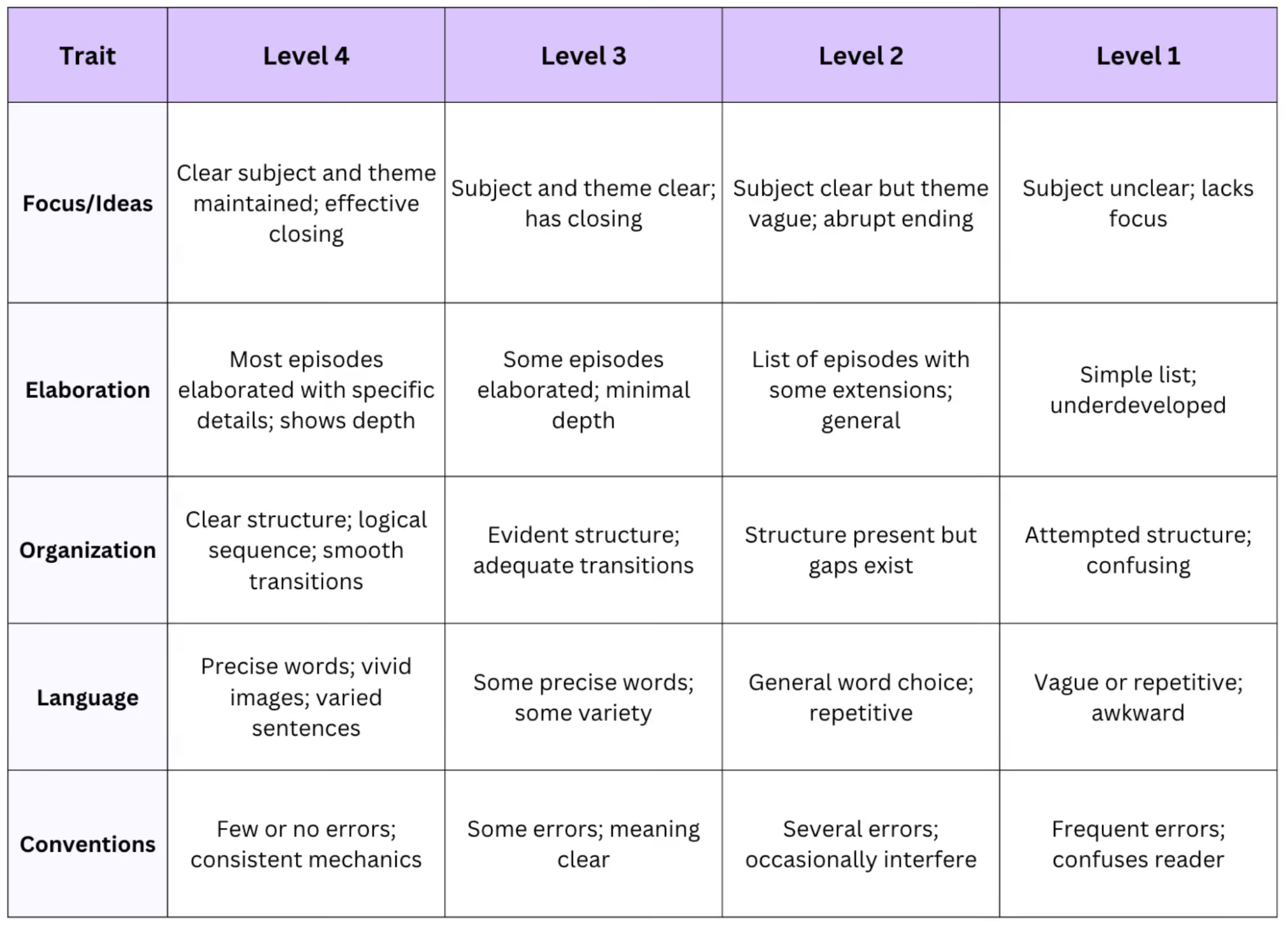
Note: Some rubrics use 6-level scales or mixed scales (e.g., 6 levels for some traits, 4 for others). The expectations at each level remain conceptually similar across different scales.
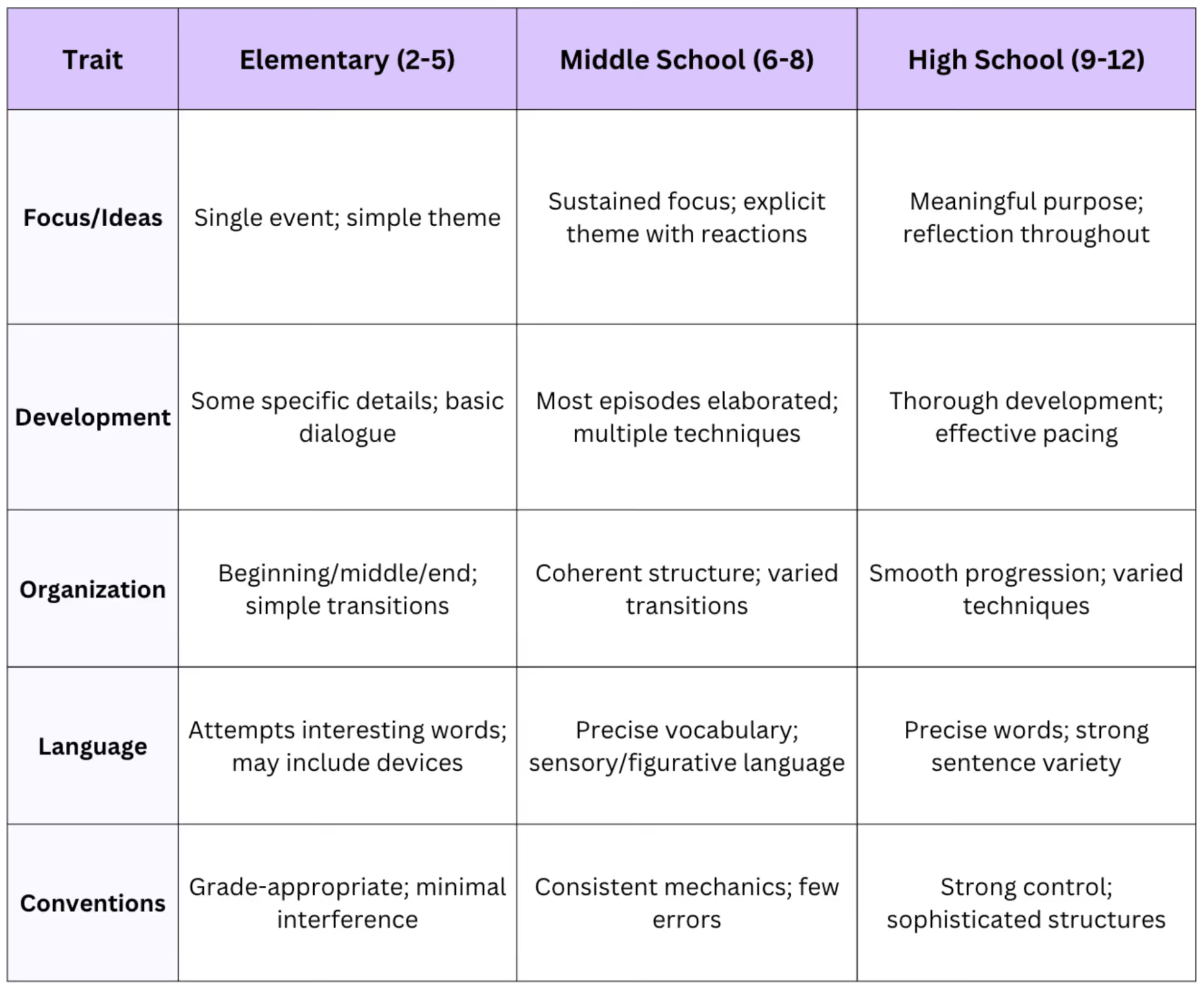
What Changes by Grade Level
Narrative expectations increase in complexity as students advance. While most grades assess similar traits, performance standards shift significantly.
Elementary (Grades 2-5)
- Focus on single event with simple theme
- Basic elaboration with some specific details
- Clear beginning/middle/end with simple transitions
- Attempts at descriptive language; may include literary devices
- Grade-appropriate conventions
Middle School (Grades 6-8)
- Sustained focus with explicit theme and reactions
- Most episodes elaborated with multiple narrative techniques
- Coherent structure with varied transitions
- Precise vocabulary with sensory and figurative language
- Consistent grammar and mechanics
High School (Grades 9-12)
- Meaningful purpose with successful reflection throughout
- Thorough development through well-chosen details and pacing
- Smooth progression with varied transitional techniques
- Precise language creating vivid images; strong sentence variety
- Strong control with sophisticated structures
Grade-Band Expectations Matrix
Benefits of EssayGrader

Time efficiency & streamlined grading
Simplify and speed up the grading process with intuitive features, allowing you to focus on impactful teaching.

Consistency
& fairness
Ensure fair and accurate grading by eliminating human bias, all while aligning with your curriculum standards.

Actionable insights
& feedback
Receive detailed feedback and growth insights on each essay and seamlessly share them with your students.
Less grading, more teaching
EssayGrader cuts down grading workload so teachers can focus on teaching the craft of writing instead of getting stuck in conventions and mechanics.
Better student outcomes
Students get consistent practice and instant feedback that helps them improve writing skills, build confidence, and prepare for timed assessments like AP exams.
Hours saved every week
Teachers save 5–6 hours a week on grading. That time can be redirected to lesson planning, one-on-one support, or simply reclaiming personal time.
What teachers say about EssayGrader
"EssayGrader is unparalleled in giving students the opportunity to practice their writing and receive the feedback they need to improve. The extensive practice my students get from EssayGrader reduces my grading workload and prepares them for the timed writes I read and score, as well as for the AP exam itself."
.avif)
"This is the first time that an innovation has directly impacted my ability to reach students at a higher level. EssayGrader helps me not to be bogged down by the tedious, albeit necessary, minutia of things like conventions and grammar which frees up my grading time for me to teach and evaluate the “art” of writing."

"EssayGrader has been phenomenal to use for my ELA classes.I grade all of my ELA essays with Common Core State Standards, and it probably saves me 5-6 hours of time per week. I loved it so much that I recommended it to our principal, and we are looking to roll this out with other teachers at our school."
.avif)