NJSLA/PARCC Writing Rubrics Overview
The New Jersey Student Learning Assessment (NJSLA/PARCC) evaluates students in grades 3-11 using computer-based writing assessments. New Jersey's writing assessment is administered online each spring and measures three distinct writing task types based on Common Core State Standards.

- Grades (rubric coverage): 3-11
- Administration: Spring (once yearly)
- Format: Computer-based with text-based prompts
- Writing Types: Research Simulation Task (RST), Literary Analysis Task (LAT), and Narrative Task (NT)
- Grade Bands: 3, 4-5, and 6-11
- Scoring: Grade 3 uses 0–3; Grades 4–11 use 0–4.
- Assessment programs: NJSLA (3–9), NJGPA (11)




Free AI Grader for NJSLA Rubric
We've developed an AI grading platform that allows you to grade an entire class's essays in 2 minutes or less using New Jersey's official NJSLA writing rubrics. Try it out for free below.


%201.svg)
Official NJSLA/PARCC Writing Rubrics
How to Score Writing Using NJSLA Writing Rubrics
New Jersey's NJSLA writing rubrics use a comprehensive scoring system across two main domains. Teachers score each domain separately, with responses earning scores by demonstrating the descriptors outlined in each score point.
- For RST and LAT Tasks:
- Reading Comprehension and Written Expression: Demonstrates comprehension through accurate analysis; addresses prompt with effective development appropriate to task, purpose, and audience; uses clear reasoning supported by relevant, text-based evidence; shows effective organization with clear and coherent writing; uses language effectively to clarify ideas.
- Knowledge of Language and Conventions: Command of standard English conventions at appropriate complexity level; grammar, mechanics, and usage that support meaning and clarity.
- For Narrative Writing Tasks:
- Written Expression: Effective development with narrative elements appropriate to task; effective organization with clear and coherent writing; uses language effectively to clarify ideas
- Knowledge of Language and Conventions: Command of standard English conventions at appropriate complexity level; grammar, mechanics, and usage that support meaning and clarity
NJSLA/PARCC Rubric Score Points
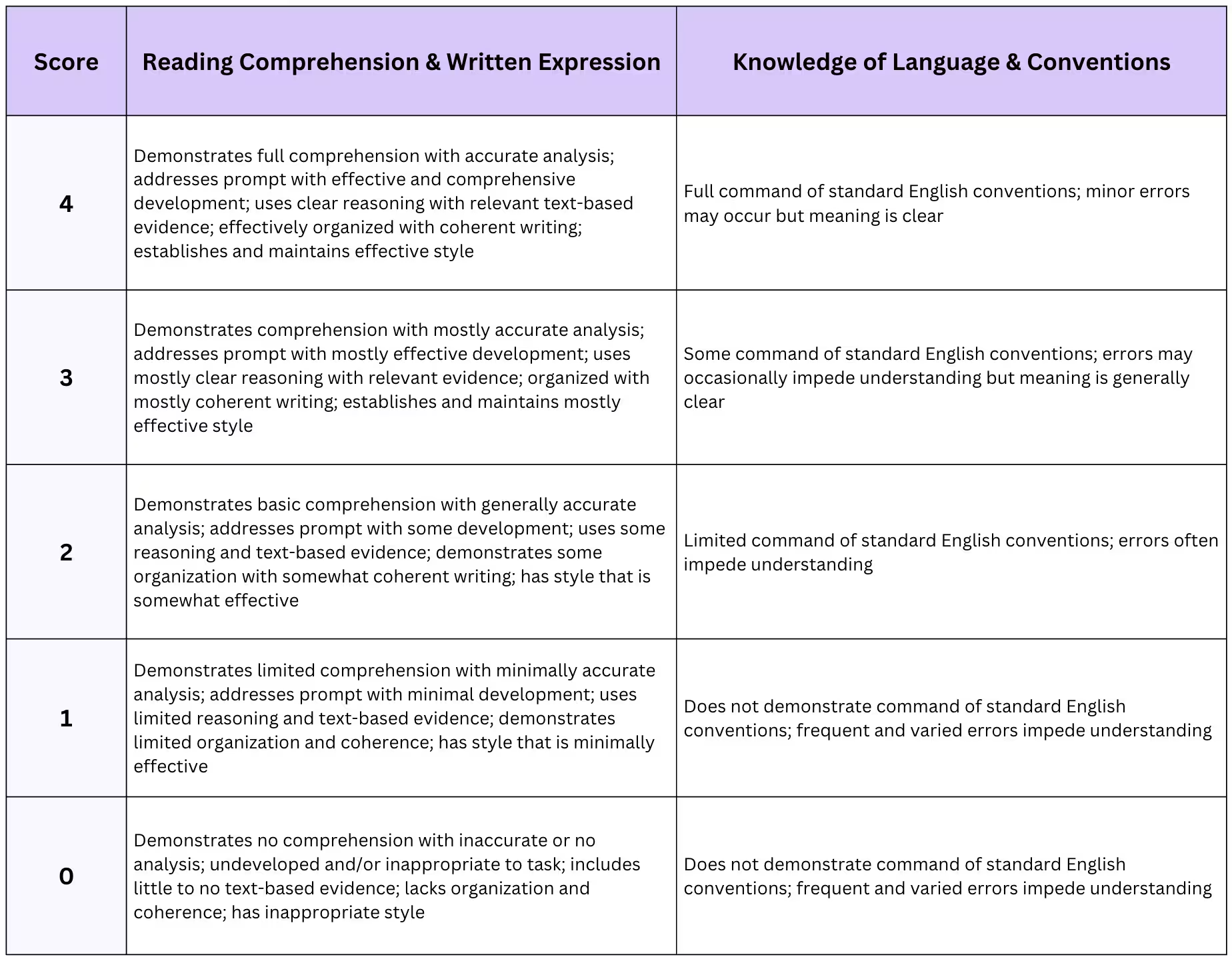
Note: These are rubric score points (0-4), separate from test performance levels (1-5).
NJSLA/PARCC Writing Task Differences by Type
Literary Analysis Task (LAT)
Literary Analysis Tasks focus on close reading and analysis of literary texts:
- Students analyze one or more literary texts, often two
- Develop claims about literary elements, themes, or author's craft
- Support analysis with specific evidence from the text
- Demonstrate understanding of literary techniques and meanings
- Focus on analytical writing about literature
Research Simulation Task (RST)
Research Simulation Tasks require students to analyze and synthesize information from multiple sources:
- Students read 2-3 sources on a topic
- Develop claims supported by evidence from sources
- Demonstrate understanding through explanation and analysis
- Use relevant text-based evidence from the sources
- Focus on informational/explanatory writing
Narrative Writing Task (NT)
Narrative Tasks allow students to demonstrate creative writing skills:
- Students write original stories based on prompts
- Develop characters, setting, and plot elements
- Use narrative techniques like dialogue, pacing, and description
- Organize events in logical sequence
NJSLA Test Performance Levels
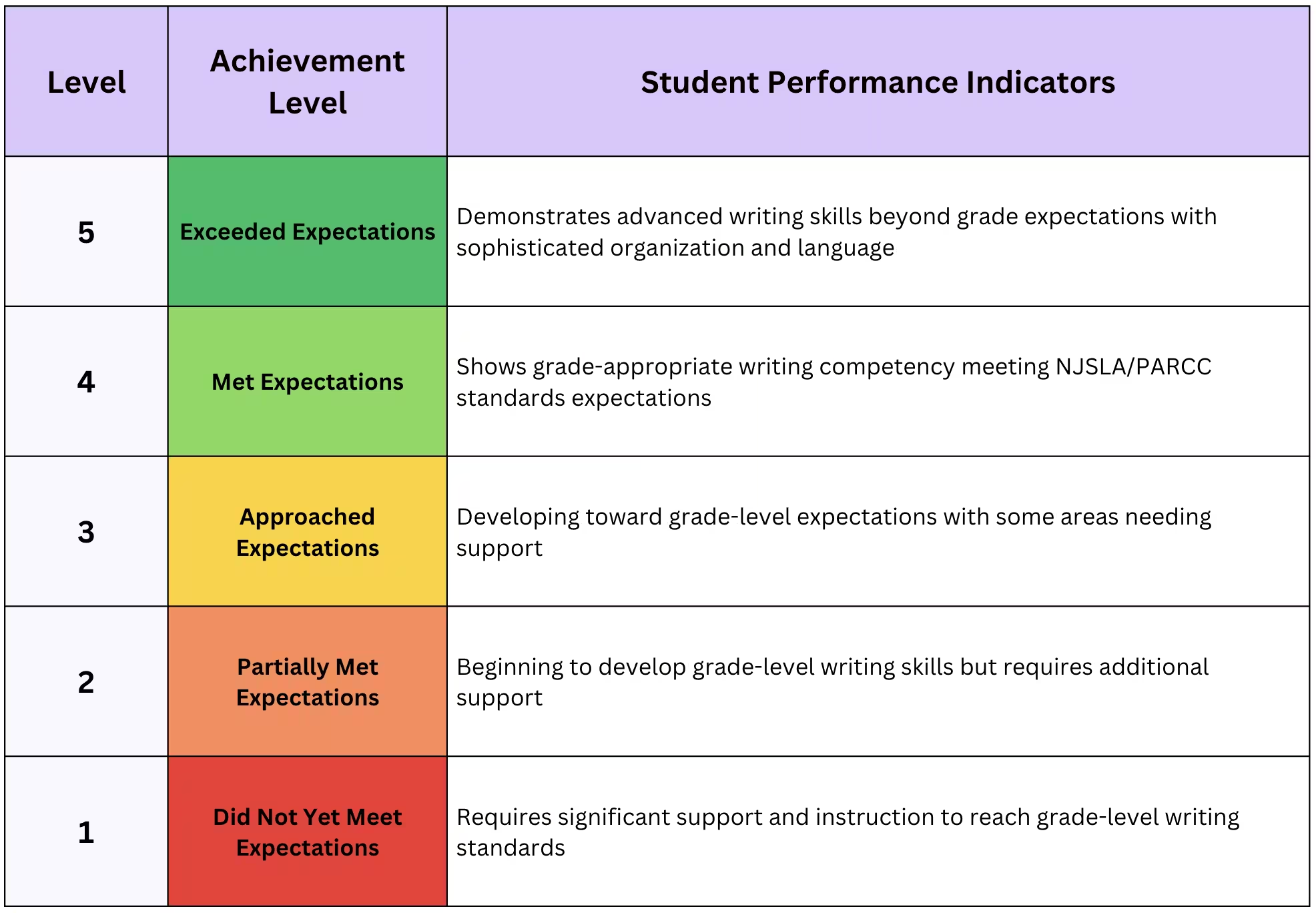
Note: These are overall test performance levels (1-5) used for state reporting, which are different from individual rubric score points (0-4). Test performance levels combine multiple rubric scores across all assessment components.
Official NJSLA/PARCC Resources
Writing Practice Items (by grade) - Paper practice test booklets that include the PCR writing prompt(s).
Benefits of EssayGrader

Time efficiency & streamlined grading
Simplify and speed up the grading process with intuitive features, allowing you to focus on impactful teaching.

Consistency
& fairness
Ensure fair and accurate grading by eliminating human bias, all while aligning with your curriculum standards.

Actionable insights
& feedback
Receive detailed feedback and growth insights on each essay and seamlessly share them with your students.
Less grading, more teaching
EssayGrader cuts down grading workload so teachers can focus on teaching the craft of writing instead of getting stuck in conventions and mechanics.
Better student outcomes
Students get consistent practice and instant feedback that helps them improve writing skills, build confidence, and prepare for timed assessments like AP exams.
Hours saved every week
Teachers save 5–6 hours a week on grading. That time can be redirected to lesson planning, one-on-one support, or simply reclaiming personal time.
What teachers say about EssayGrader
"EssayGrader is unparalleled in giving students the opportunity to practice their writing and receive the feedback they need to improve. The extensive practice my students get from EssayGrader reduces my grading workload and prepares them for the timed writes I read and score, as well as for the AP exam itself."
.avif)
"This is the first time that an innovation has directly impacted my ability to reach students at a higher level. EssayGrader helps me not to be bogged down by the tedious, albeit necessary, minutia of things like conventions and grammar which frees up my grading time for me to teach and evaluate the “art” of writing."

"EssayGrader has been phenomenal to use for my ELA classes.I grade all of my ELA essays with Common Core State Standards, and it probably saves me 5-6 hours of time per week. I loved it so much that I recommended it to our principal, and we are looking to roll this out with other teachers at our school."
.avif)
Frequently Asked Questions About NJSLA Writing Rubric
Common questions teachers ask about the NJSLA rubric. Contact us if you don't see your question answered below.
Are the NJSLA and PARCC writing rubrics the same?
Yes. New Jersey uses the PARCC-lineage NJSLA writing rubric across grade bands (3; 4–5; 6–11). The official PDF posted by NJ shows the same trait structure and score points teachers know from the PARCC writing rubric.
Does the NJSLA narrative rubric score reading?
No. The NJSLA narrative writing rubric scores Written Expression and Knowledge of Language & Conventions only; the reading dimension is not scored for elicited narratives. This is stated in the official rubric document.
Can I use this NJSLA rubric to score grade 11 (NJGPA) writing?
Yes. For high school, NJ directs educators to use the NJSLA-ELA Grades 6–11 rubrics when scoring NJGPA writing tasks (same framework/traits). The NJDOE portfolio guidance explicitly references using NJSLA-ELA Grades 6–11 rubrics.
What happens with off-topic, blank, or non-English responses (condition codes)?
Unscorable responses use condition codes (e.g., A = no response; B = unintelligible; C = not in English; D = off-topic; E = refusal; F = “don’t understand/know”). These are defined in the state rubric packet and help explain when a response receives no score.