Smarter Balanced (SBAC/CAASPP) Writing Rubric Overview
The Smarter Balanced (SBAC) writing rubric evaluates students in grades 3-11 using computer-based performance task writing assessments administered as part of CAASPP (California Assessment of Student Performance and Progress).
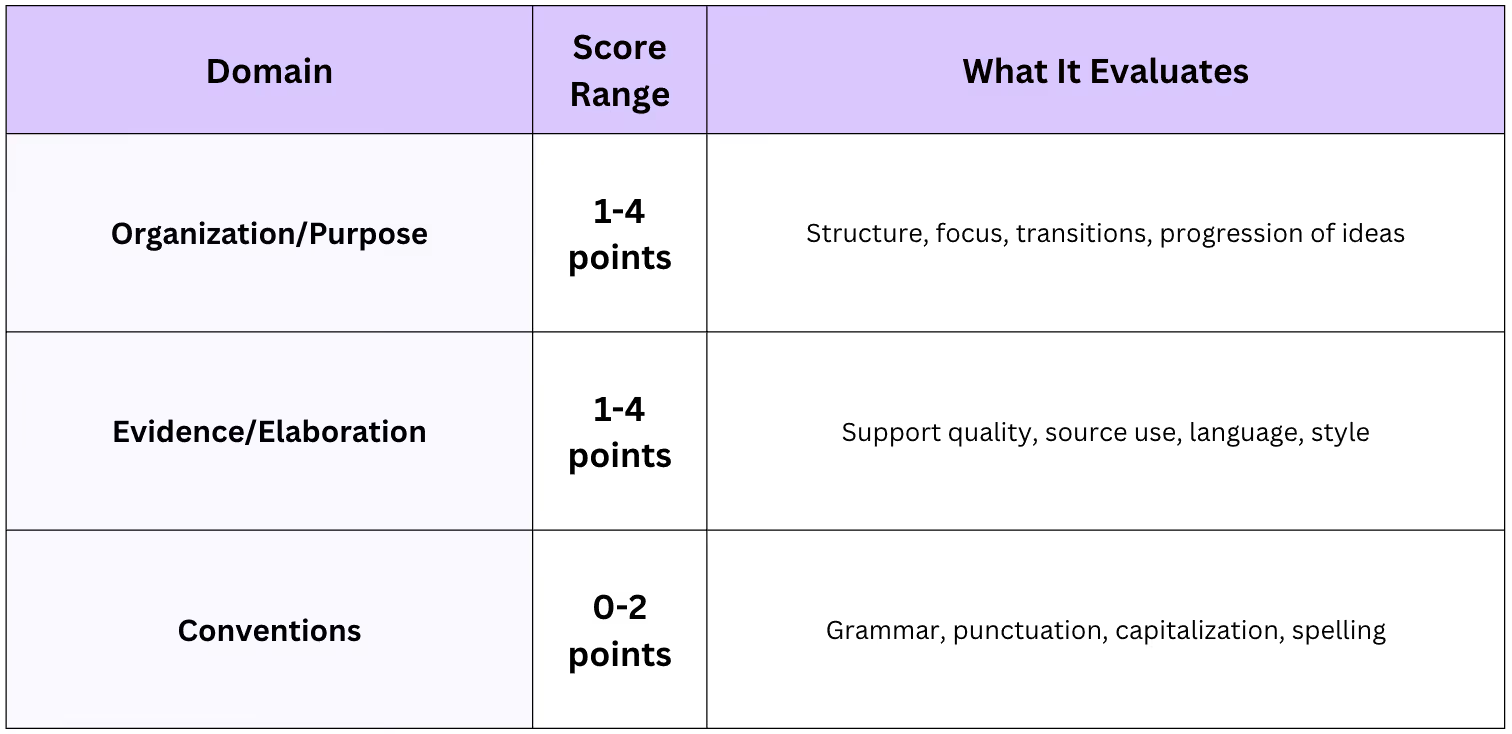
The SBAC writing rubrics provide detailed scoring criteria across three domains to assess student writing quality.
- Grades Assessed: 3-11 (varies by writing type)
- Format: Performance Task Writing Rubrics
- Writing Types: Opinion (3-5), Informational (3-5), Narrative (3-8), Explanatory (6-11), Argumentative (6-11)
- Scoring Domains: Organization/Purpose, Evidence/Elaboration, Conventions
- Scoring Scale: 4-point scale (Organization/Purpose & Evidence/Elaboration); 0-2 point scale (Conventions)
- Last Updated: June 2023





Free SBAC/CAASPP Rubric Grading Tool
We've developed an AI grading platform that allows you to grade an entire class's essays in 2 minutes or less using the official Smarter Balanced (SBAC) writing rubrics. Try it out for free below.


%201.svg)
Official SBAC/CAASPP Writing Rubrics
Grades 3-5 Rubrics
Grades 3-8 Rubrics
How to Use the SBAC/CAASPP Scoring Guide
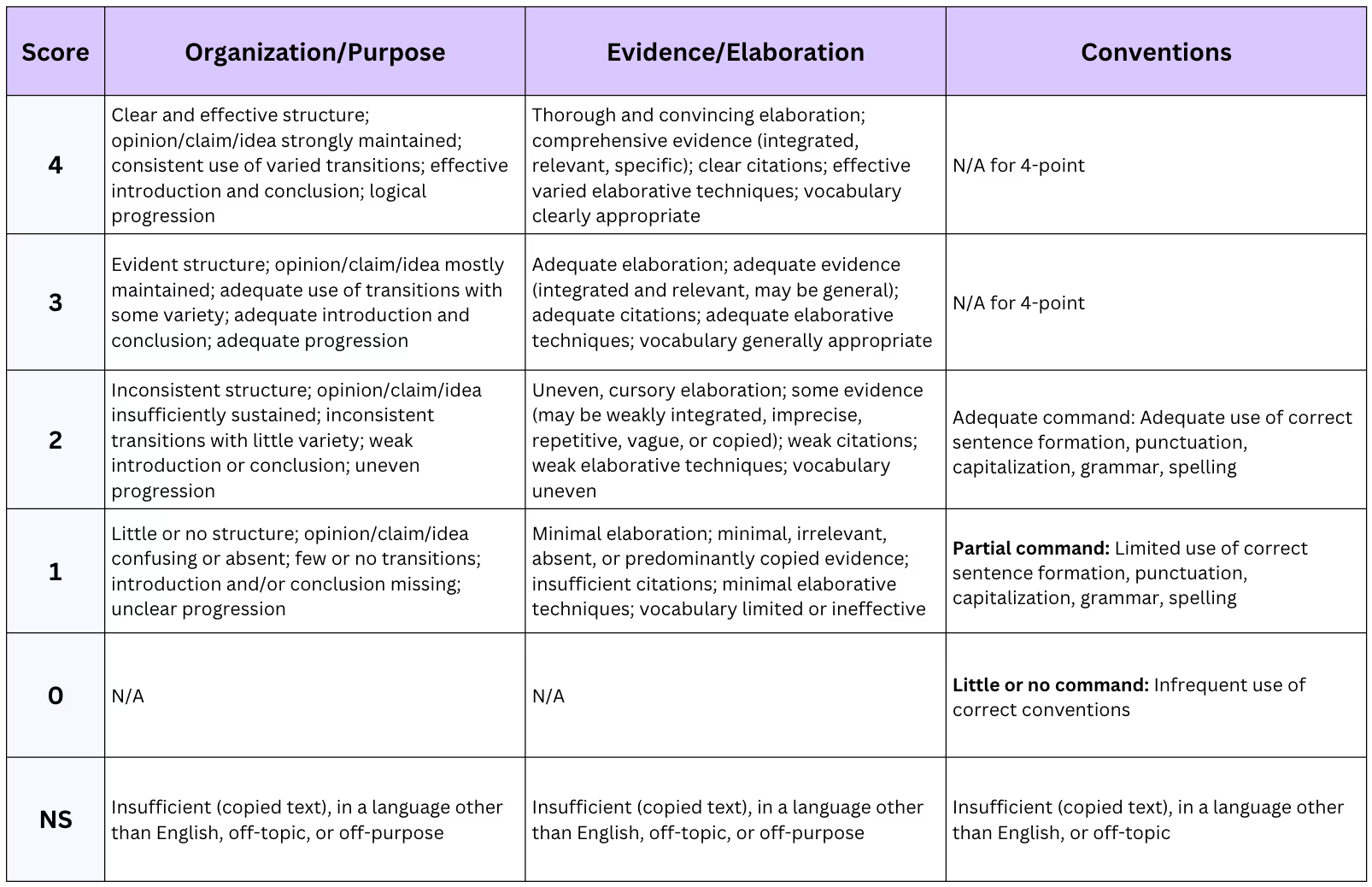
The SBAC/CAASPP performance task writing rubric uses a three-domain scoring system. Teachers score each domain separately, with student responses earning scores by demonstrating most descriptors within a given score point.
Scoring Domains:
- Organization/Purpose: Organizational structure, clarity of opinion/claim/controlling idea, use of transitional strategies, introduction and conclusion effectiveness, logical progression of ideas
- Evidence/Elaboration: Quality and integration of support/evidence, use of source material, citations and attribution, elaborative techniques, vocabulary appropriateness, writing style
- Conventions: Sentence formation, punctuation, capitalization, grammar usage, and spelling
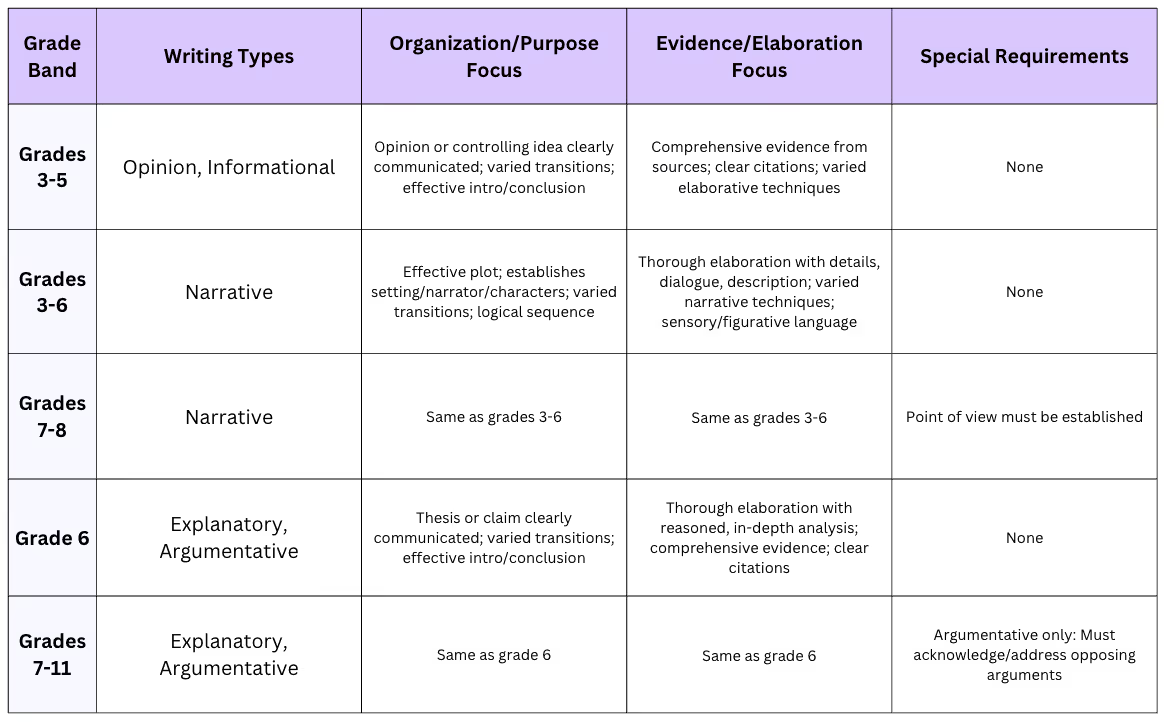
SBAC Rubric Scoring Chart
SBAC/CAASPP Writing Rubrics by Type
SBAC Narrative Writing Rubric (Grades 3-8)
The SBAC narrative writing rubric evaluates students' ability to develop real or imagined narratives using effective techniques, descriptive details, and clear event sequences.
Score 4 requirements: Effective plot that creates unity and completeness; establishes setting, narrator, characters, and point of view (grades 7-8); consistent use of varied transitions; thorough elaboration using relevant details, dialogue, and description; effective use of sensory, concrete, and figurative language; natural sequence with effective opening and closure.
Grade-specific requirement: Point of view begins at grade 7.
SBAC Argumentative Rubric (Grades 6-11)
The SBAC argumentative rubric requires students to introduce and support claims with clear reasoning and relevant evidence from sources.
Score 4 requirements: Claim clearly communicated and strongly maintained; thorough and convincing elaboration with reasoned, in-depth analysis; comprehensive evidence from sources (integrated, relevant, specific); clear citations or attribution; consistent use of varied transitions; effective introduction and conclusion; alternate and opposing arguments acknowledged or addressed (grades 7+).
Grade-specific requirement: Acknowledging and/or addressing opposing viewpoints begins at grade 7.
SBAC Explanatory Rubric (Grades 6-11)
The SBAC explanatory rubric requires students to examine and convey complex ideas and information clearly through effective selection and analysis of content.
Score 4 requirements: Thesis/controlling idea clearly communicated and strongly maintained; thorough and convincing elaboration with reasoned, in-depth analysis; comprehensive evidence from sources (integrated, relevant, specific); clear citations or attribution; consistent use of varied transitions; effective introduction and conclusion; logical progression with strong connections.
SBAC Opinion Writing Rubric (Grades 3-5)
The SBAC opinion writing rubric asks students to state and support an opinion with reasons and evidence from source materials.
Score 4 requirements: Opinion clearly communicated and strongly maintained; thorough and convincing elaboration; comprehensive evidence from sources (integrated, relevant, specific); clear citations or attribution; consistent use of varied transitions; effective introduction and conclusion; vocabulary clearly appropriate for audience and purpose.
SBAC Informational Writing Rubric (Grades 3-5)
The SBAC informational writing rubric requires students to examine and convey ideas and information clearly using source materials.
Score 4 requirements: Controlling/main idea clearly communicated and strongly maintained; thorough elaboration; comprehensive evidence from sources (integrated, relevant, specific); clear citations or attribution; consistent use of varied transitions; effective introduction and conclusion; logical progression with strong connections.
SBAC/CAASPP Score Point Descriptors
SBAC Rubric Differences by Grade Level
Benefits of EssayGrader

Time efficiency & streamlined grading
Simplify and speed up the grading process with intuitive features, allowing you to focus on impactful teaching.

Consistency
& fairness
Ensure fair and accurate grading by eliminating human bias, all while aligning with your curriculum standards.

Actionable insights
& feedback
Receive detailed feedback and growth insights on each essay and seamlessly share them with your students.
Less grading, more teaching
EssayGrader cuts down grading workload so teachers can focus on teaching the craft of writing instead of getting stuck in conventions and mechanics.
Better student outcomes
Students get consistent practice and instant feedback that helps them improve writing skills, build confidence, and prepare for timed assessments like AP exams.
Hours saved every week
Teachers save 5–6 hours a week on grading. That time can be redirected to lesson planning, one-on-one support, or simply reclaiming personal time.
What teachers say about EssayGrader
"EssayGrader is unparalleled in giving students the opportunity to practice their writing and receive the feedback they need to improve. The extensive practice my students get from EssayGrader reduces my grading workload and prepares them for the timed writes I read and score, as well as for the AP exam itself."
.avif)
"This is the first time that an innovation has directly impacted my ability to reach students at a higher level. EssayGrader helps me not to be bogged down by the tedious, albeit necessary, minutia of things like conventions and grammar which frees up my grading time for me to teach and evaluate the “art” of writing."

"EssayGrader has been phenomenal to use for my ELA classes.I grade all of my ELA essays with Common Core State Standards, and it probably saves me 5-6 hours of time per week. I loved it so much that I recommended it to our principal, and we are looking to roll this out with other teachers at our school."
.avif)
Frequently Asked Questions About Smarter Balanced Writing Rubrics
Common questions teachers ask about the Smarted Balanced (SBAC) rubric. Contact us if you don't see your question answered below.
What is the CAASPP performance task rubric used for?
The CAASPP performance task rubric evaluates the Writing Extended Response (WER), which requires students to read multiple sources and respond to a prompt with a full essay. The performance task rubrics assess students' ability to organize ideas, integrate evidence from sources, and demonstrate command of writing conventions.
Which grade levels use the SBAC narrative writing rubric?
The SBAC narrative writing rubric is used for grades 3-8. Students in grades 3-6 are assessed on plot, setting, narrator, and characters. Starting in grade 7, the narrative rubric also requires students to establish point of view.
What are the score ranges for each domain in the Smarter Balanced rubric?
The Smarter Balanced rubric uses different score ranges by domain: Organization/Purpose and Evidence/Elaboration are scored 1-4 points, while Conventions are scored 0-2 points. The total possible score across all three domains ranges from 2-10 points.
Does the SBAC/CAASPP narrative writing rubric for grade 4 differ from other grades?
The SBAC/CAASPP narrative writing rubric grade 4 uses the same criteria as grades 3-6: effective plot, established setting and characters, varied transitions, and sensory language. The key difference begins at grade 7, when point of view becomes a required element in the narrative rubric.
What does "NS" (No Score) mean on the SBAC rubric?
"NS" means the response is insufficient, off-topic, off-purpose, in a language other than English, or includes predominantly copied text. Responses receiving NS do not meet the minimum requirements for scoring across any domain.