We’ve all had those days where grading makes us feel mentally exhausted.
For the first few papers, we have the mental stamina to read closely, understand the arguments a student has made, and leave feedback that matches the attention their work deserves.
Then after reading and grading a dozen papers already, the last chunk does not get the same level of attention, at least not in the same sitting.
That is called grading fatigue (which we will address in detail here), and it is more than simply being tired.
It is what happens when a judgment-heavy task like grading papers keeps demanding your full attention long after your attention has run out.
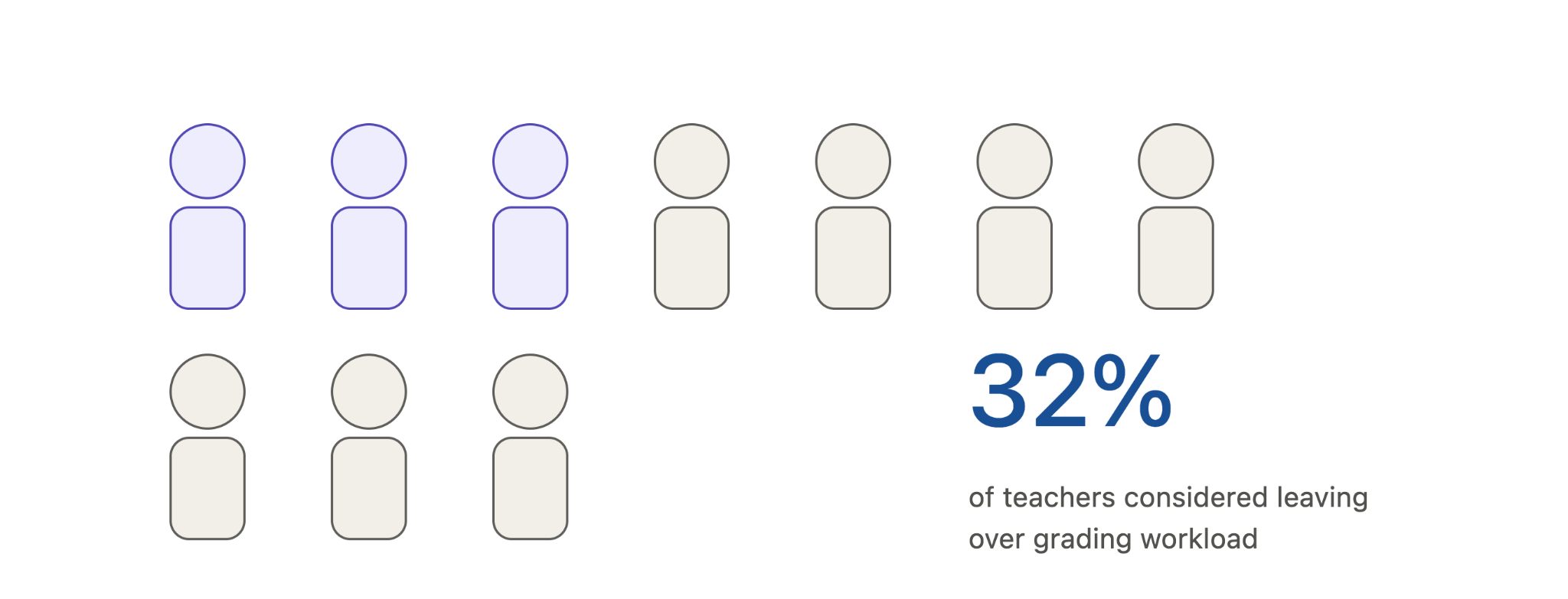
In fact, a 2025 Learnosity survey of 258 US teachers found that 32% of US teachers had actually considered leaving the teaching profession because they couldn’t handle the grading workload.
What is grading fatigue?
Grading fatigue is the mental and emotional drain that a teacher can feel while grading. It is completely normal and can be overcome, but let's first understand why it happens.
If you’re a K-12 teacher, you might teach 4-5 classes, and if you’re a higher-ed professor, you might have 50+ students under your wing when it comes to grading quizzes, assignments, and papers.
As you sit to grade papers, there is:
- Cognitive load involved because you have to keep the rubrics in mind, accompanied by decision fatigue, as there are thousands of micro-judgments on quality, arguments, grammar, etc.
- The emotional labor of giving constructive feedback, all of these can induce grading fatigue very quickly.
It is also often confused with teacher burnout, but they are very different in reality. That is because grading fatigue happens during a prolonged session that requires undivided attention, while teacher burnout is broader and develops from prolonged stress across the job (grading can be one contributor).
Another term in the table above is rater fatigue, which assessment researchers use for the same effect in formal scoring contexts.
Assessment researchers have studied this effect in essay scoring and other forms of human assessment. One study, for example, found that raters left fewer comments as they progressed through a set of essays.
How do teachers actually feel about grading fatigue?
The easiest way to understand grading fatigue is to listen to teachers describe it. Here’s what teachers actually feel.
In that same Learnosity survey we mentioned above, 62% of US teachers called grading one of the worst parts of their job, almost 34% in the same survey said that it left them exhausted, and 26% said it left them overwhelmed. On average, teachers reported spending 9.9 hours a week grading, and 95% said they take grading work home.
Then there are actual quotes from teachers' conversations that we found on Reddit when they talk about their actual experience. One professor in a Reddit community described grading essays as:
“The most tedious task I had as a professor, but also the most important… I generally spent about 0.5–1 hour a week per student on grading design reports”.
There are other teachers who shared their thoughts under the same subreddit:
“I get an enormous dread even before starting”.

“Oh man, I feel this (grading) so hard. Last semester I had a stack of 120 essays sitting on my desk for 3 weeks, and I genuinely considered just throwing them in the recycling bin and starting over”.
Michelle Kassorla, PhD, a professor of English at Georgia State University Perimeter College who has taught composition and literature for 30 years, describes something similar from a different angle. In a LinkedIn post specifically about grading fatigue, she wrote that:
“I am human, so I get tired, bored, and overwhelmed by grading. Sometimes I overlook things. When I put my students' essays into GenAI (Generative AI), it helps focus my attention on places where my students are doing really well.“
She mentions that she uses GenAI as an additional measure to augment her process, rather than replacing her own assessment.
Getting tired or bored doesn’t mean that you’re doing your job an injustice or are being unfair to your students. Getting tired means you are human, and your mind can get exhausted from making hundreds of small decisions about the same kind of work, often after the rest of the school day is already over.
What happens when teachers get fatigued? The real cost of grading fatigue
This is the part that actually affects both teachers and students equally. Here are some effects of grading fatigue that should never be ignored:
1. Students get thinner, less constructive feedback
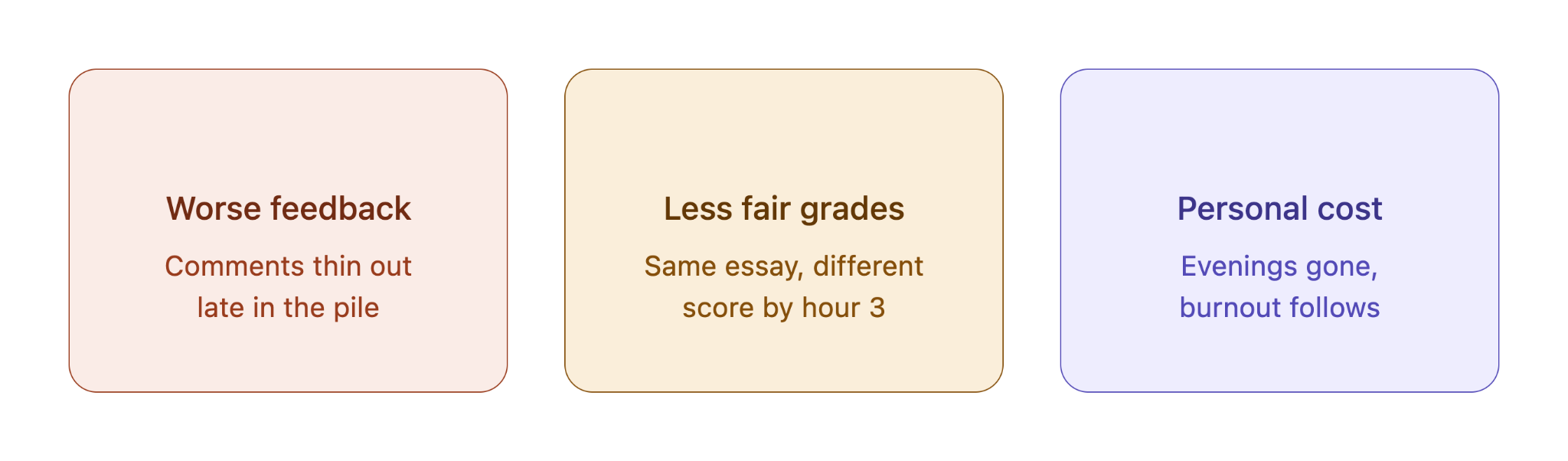
If an essay comes at the end of the pile, chances are that it might not get detailed comments in the feedback, where feedback tends to be one of the most valuable elements of the entire exercise.
Research into this phenomenon backs up what many teachers see anecdotally. For example, Mahshanian and colleagues have shown that raters give significantly fewer comments as they progress through a stack of essays. These include things like grammar, word choice, and organization. And this has ramifications for how much students get from the process.
2. Grades can become less consistent
A tired teacher isn’t necessarily an unfair teacher. There are other issues at play here when it comes to grading.
The problem is that human scoring is not perfectly stable. In their analysis of the essay-scoring process, Leckie and Baird found evidence of instability in rater severity over time, as well as some central-tendency effects.
A separate study by Mahshanian and Shahnazari said the same thing (2020). Scores assigned to the first 16 tasks were significantly lower than those assigned to the last 12, and the final four tasks were scored highest of all. The authors attribute that drift to rater fatigue and argue it introduces bias into the results.
3. Teachers pay for it personally
As for students, there are consequences for teachers as well.
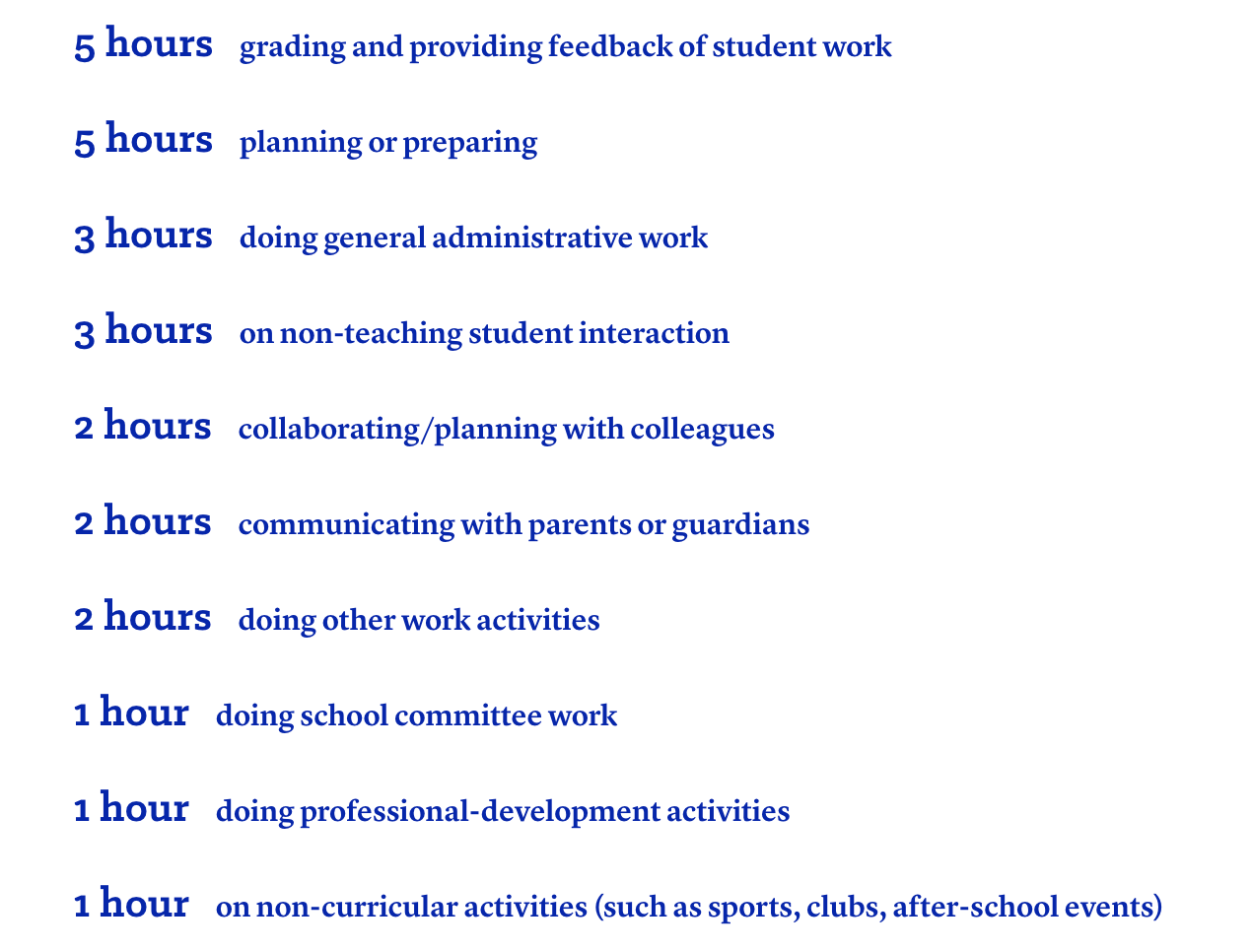
The 2022 Merrimack College Teacher Survey, conducted by the EdWeek Research Center, revealed that teachers work a median of 54 hours each week, including five hours for grading and giving feedback. Learnosity's more recent figure is higher, at 9.9 hours a week, so the real number likely depends heavily on subject and grade level.
Read this blog if you want to understand in detail how much time teachers spend grading.
The same pattern shows up in a report from RAND on its “State of the American Teacher” survey (conducted in 2026), which found that 55% of teachers reported experiencing frequent job-related stress, down from 62% in 2025 but still well above the 34% reported by comparable working adults.
What is the best way to overcome grading fatigue without compromising feedback quality?
There is no magic trick that makes 120 essays enjoyable. The more useful goal is to reduce the amount of sustained judgment you are asking yourself to do at once.
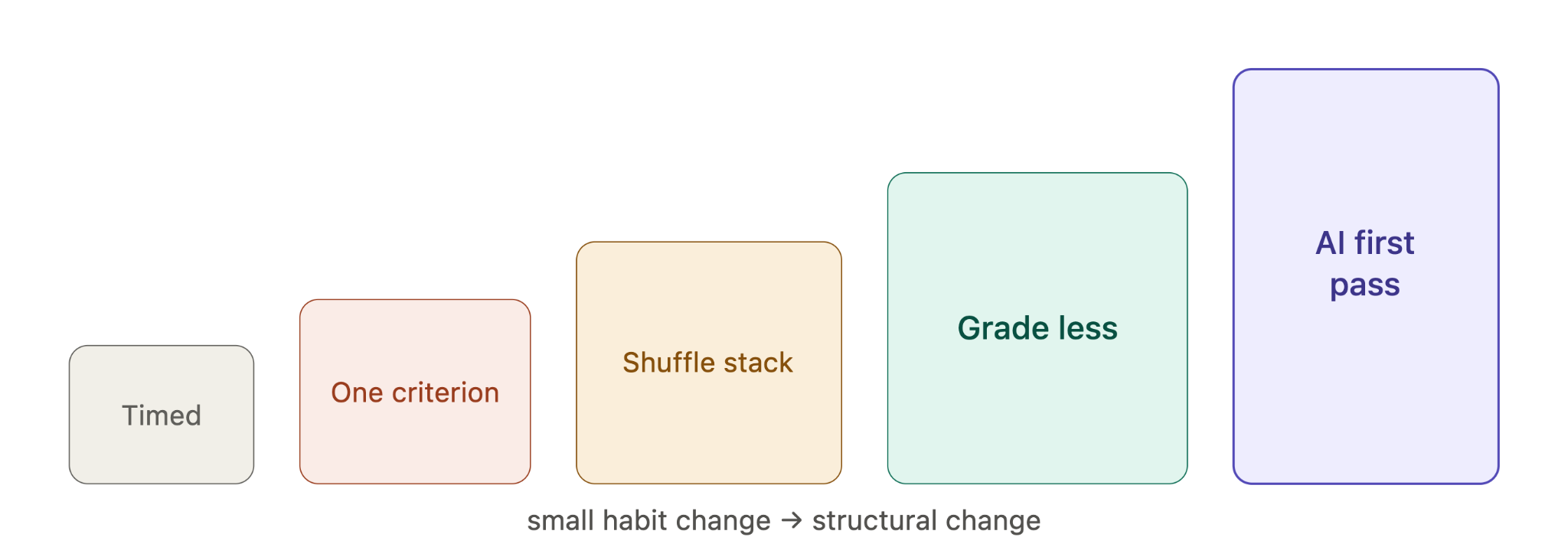
1. Grade in short, timed bursts
Rather than trying to grade essays non-stop (which will leave you burned out before you finish), try working in chunks, maybe 25-40 minutes of grading followed by taking a proper break.
That means going on a short walk, getting yourself some coffee, or just giving yourself permission to stop staring at a screen.
If you’ve got real focus issues when you get back into grading, don’t push yourself. Just move on to the next thing on your list and come back later when your focus is up.
It’s far better to skip those last 20 essays for another time rather than risking their quality because you pushed yourself too hard.
2. Grade one criterion at a time
Try reading all 30 papers for their thesis and argument first, then come back to see if they provide good evidence and are well organized.
This way you’re only making judgments about one element of an essay at a time. Not only does this help with focus, but you’ll also find that it’s much easier to compare the different pieces.
3. Shuffle the deck
If there’s anything that might be affected by fatigue, make sure that no one set of students ends up being stuck at the bottom of the pile all the time.
Randomizing the order and doing a bit of a spot check on some of those last ones versus what you did before could help too.
4. Don’t grade everything
There are loads of things where a grade isn’t required, whether they’re self-assessment or peers assessing each other’s work.
Don’t feel bad about handing back without marks and just leaving space for more meaningful feedback either.
5. Let AI handle the first pass
An AI grading tool can play a very useful role in helping you avoid or overcome grading fatigue. Instead of asking it to replace your judgment, you can use it to handle repetitive parts of the assessment so you can act as the editor and final decision-maker.
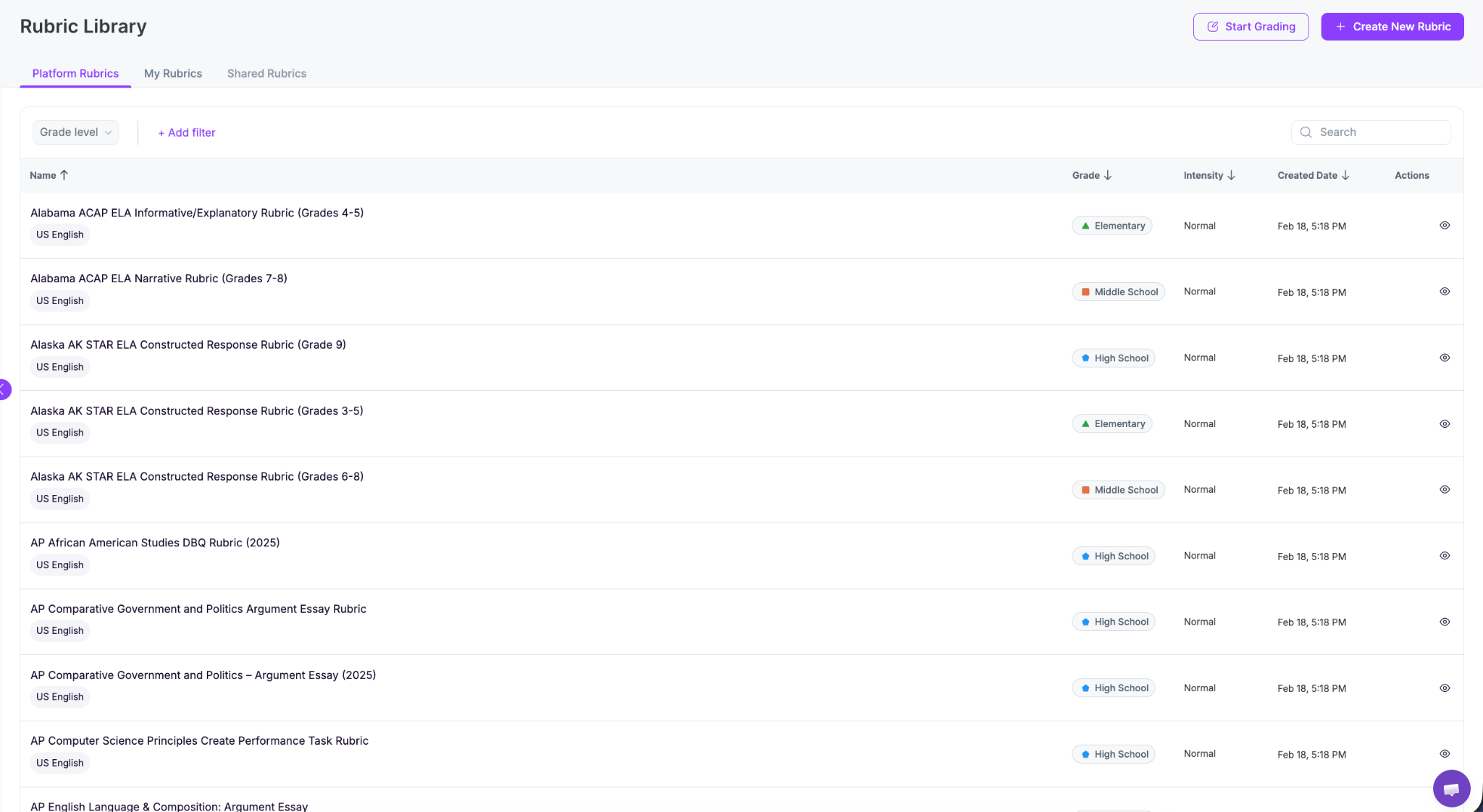
EssayGrader is built around that approach. It can grade submissions against the teacher's own rubric and has an 800+ rubric library of built-in standards rubrics as well.
EssayGrader can generate feedback for the teacher to review and edit before it reaches a student. It has 96% alignment with human graders in a study of more than 1,000 essays.
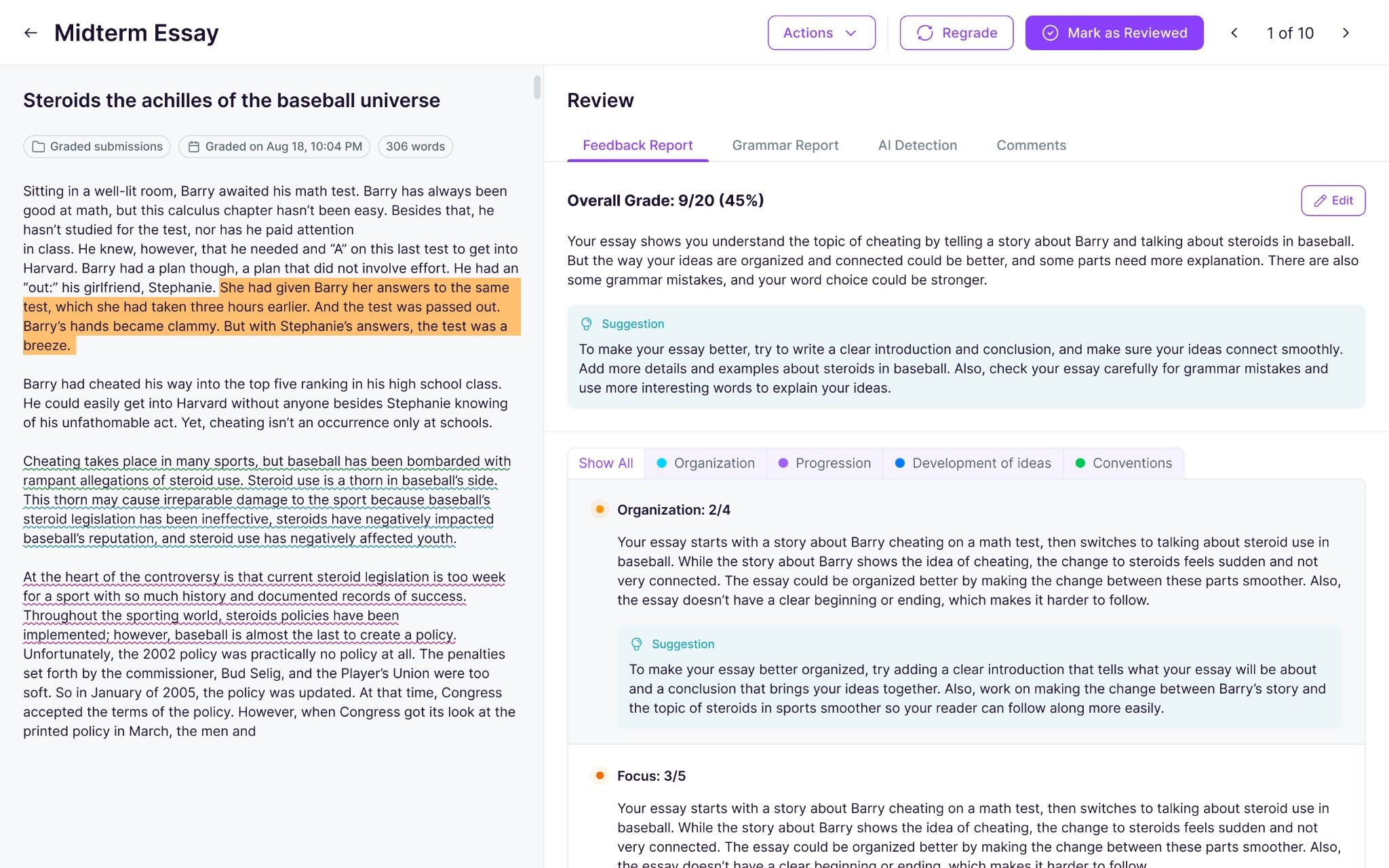
Nevertheless, a teacher’s judgment still matters. A tool cannot know that a student struggled with a concept for three weeks, finally understood it in this essay, and deserves a different kind of comment.
So while EssayGrader can cut your grading time by 80% and give meaningful feedback on each essay in seconds, you can review and edit that feedback for any student you want.
You can try EssayGrader for free and see how it helps you cut grading time without compromising on feedback quality.
Grade essays faster without feeling guilty
Grading fatigue is not a sign that you have stopped caring about your students. It is a predictable response to doing a demanding judgment task again and again, often after the school day has already ended.
The answer is not to rush through every paper. It is to protect the quality of the judgment that students actually need from you. Shorter sessions, smarter assessment practices and carefully used AI can take some of the mechanical weight off without handing over the teacher's role.
Try EssayGrader for free and grade your first 50 essays using your own rubric or selecting from EssayGrader’s 800+ built-in standards rubrics. You get to review and edit the feedback before students see it.
FAQs
What are the symptoms of grading fatigue?
Common signs include declining attention, slower reading, shorter feedback, procrastination before grading sessions, and growing irritation towards student work. Some teachers also experience headaches, eye strain, or poor sleep when grading regularly spills into evenings. Another sign is when papers begin to blur together, and it becomes harder to make the same careful judgments you made at the start of the session.
What does the word “fatigue” mean in grading?
In assessment research, fatigue refers to changes in a rater's scoring or commenting as a marking or grading session continues. It is therefore more specific than simply feeling tired. Researchers study this as rater fatigue, alongside related issues such as rater severity and severity drift.
What is the best way to overcome grading fatigue?
The most practical approach is to reduce the amount of sustained judgment you do at once. You should work in shorter sessions, grade by criterion, vary the order of papers, and reduce unnecessary graded assignments. AI can also handle repetitive and most time-consuming parts of grading, and you (the teacher) can review the final grade and feedback. EssayGrader AI is designed for this human-in-the-loop workflow.
Is grading fatigue the same as teacher burnout?
No. Grading fatigue is usually task-specific and can develop during a heavy grading or marking session, while teacher burnout is broader and develops from prolonged work-related stress. They can overlap, however. RAND's 2025 survey found that 53% of US public-school teachers reported burnout, showing that the wider wellbeing problem is substantial.

.jpeg)



.avif)
.avif)
%201.svg)